QuiPay – Designing Seamless Everyday Bill Payments with Crypto
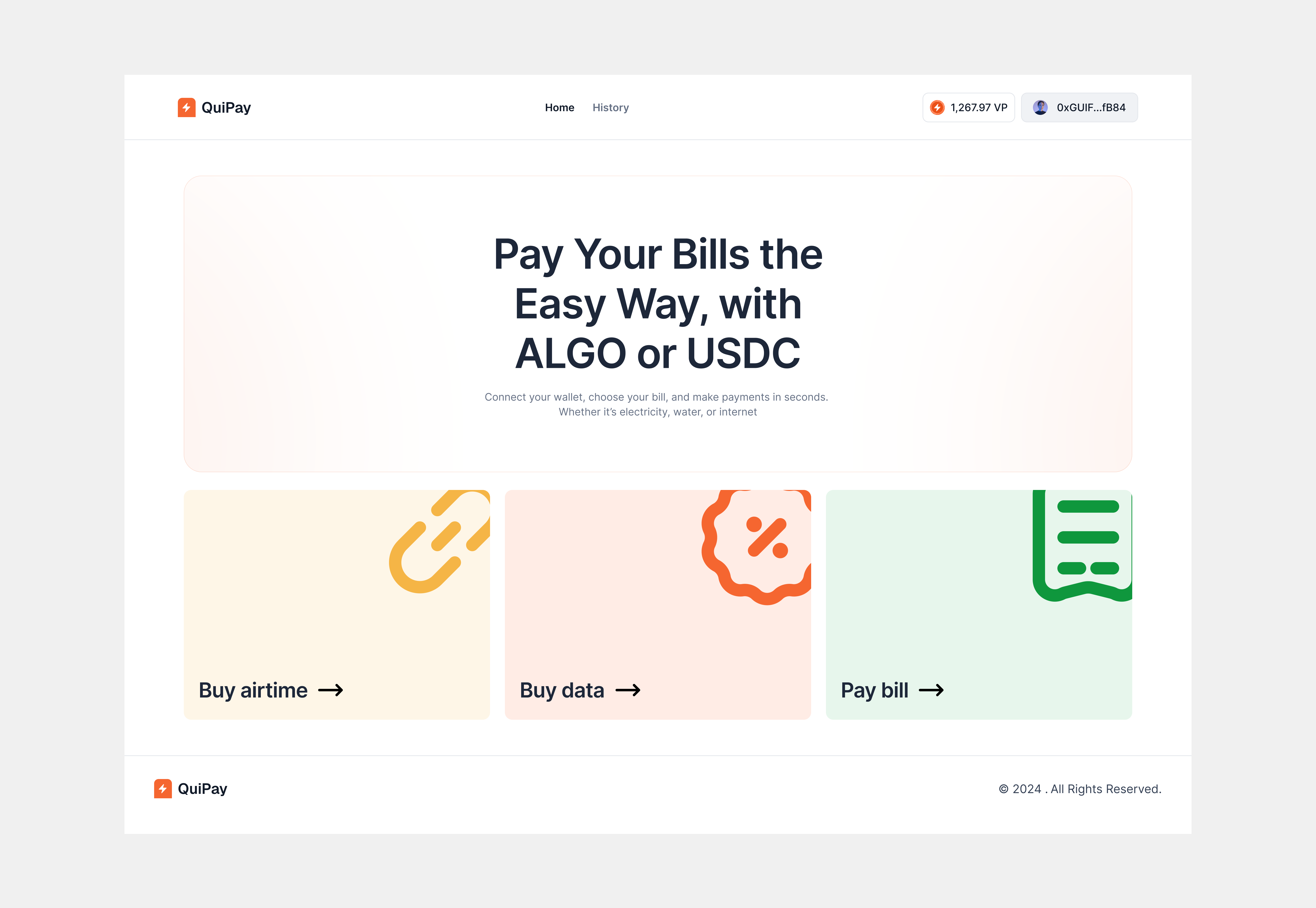
Summary: Making Crypto Practical for Everyday Nigerians
QuiPay was designed to let people pay for airtime, electricity, and internet bills directly with crypto, as easily as using a regular finance app. As the sole product designer, I led the end-to-end design of QuiPay's MVP, turning blockchain complexity into a seamless experience that felt as familiar as using Paystack or Opay. With 70% of Nigerians already using mobile payments daily, and over 12 million actively engaging with crypto, the opportunity was clear: make crypto practical for everyday life.
Problem: Crypto Was Powerful but Unusable for Bills
The challenge was turning blockchain logic into something everyday users, could trust and use confidently. Too many crypto apps overwhelmed people with jargon, long flows, or hidden costs. The vision was clear: enable crypto-based bill payments in Nigeria. Key pain points I uncovered: • Confusing fee structures and crypto conversions created distrust. • Users wanted speed: bills should be paid in 3 steps or less. • Non-crypto users expected an experience like Paystack, Opay, or Flutterwave, not a blockchain terminal.
Design Preview
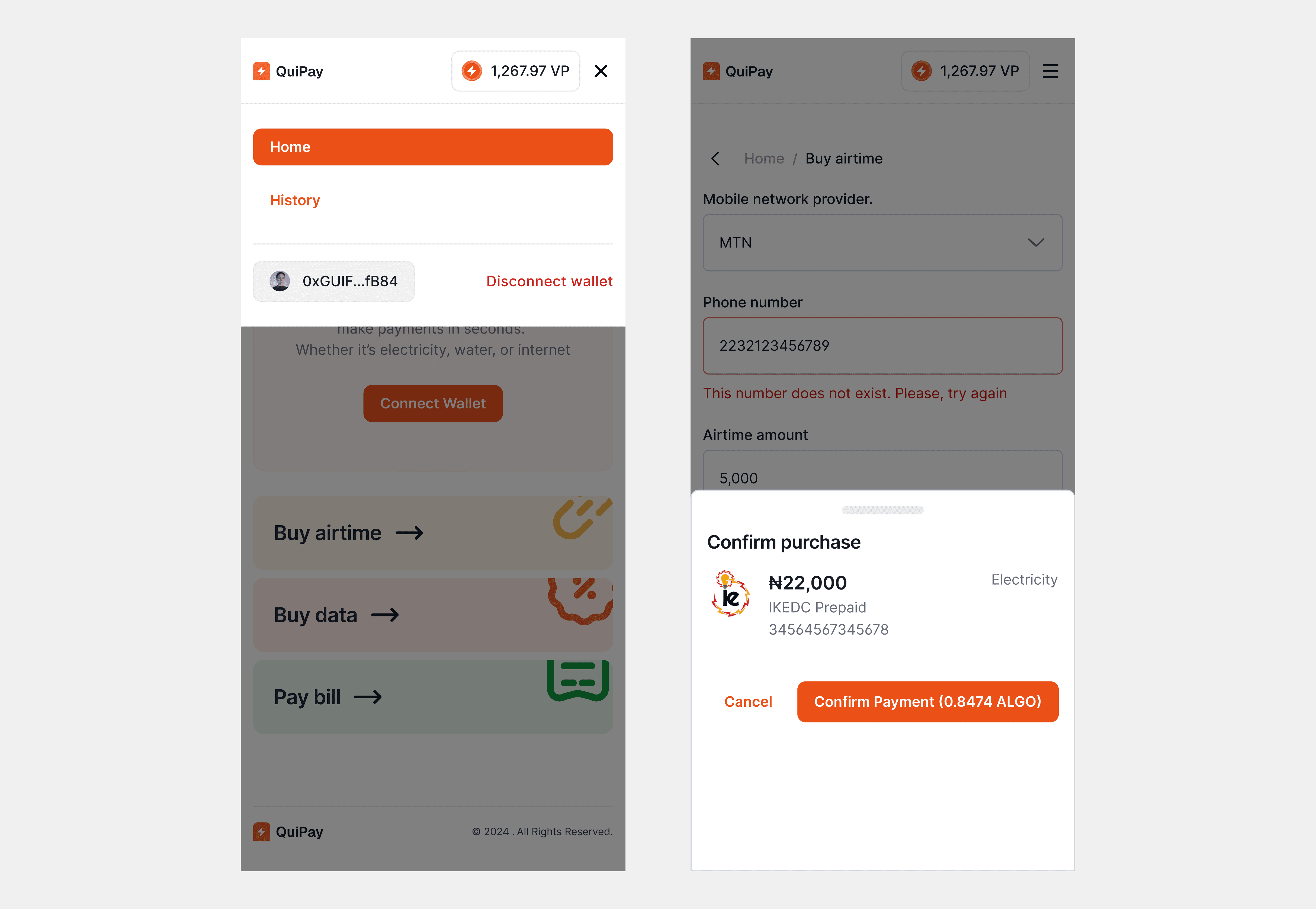
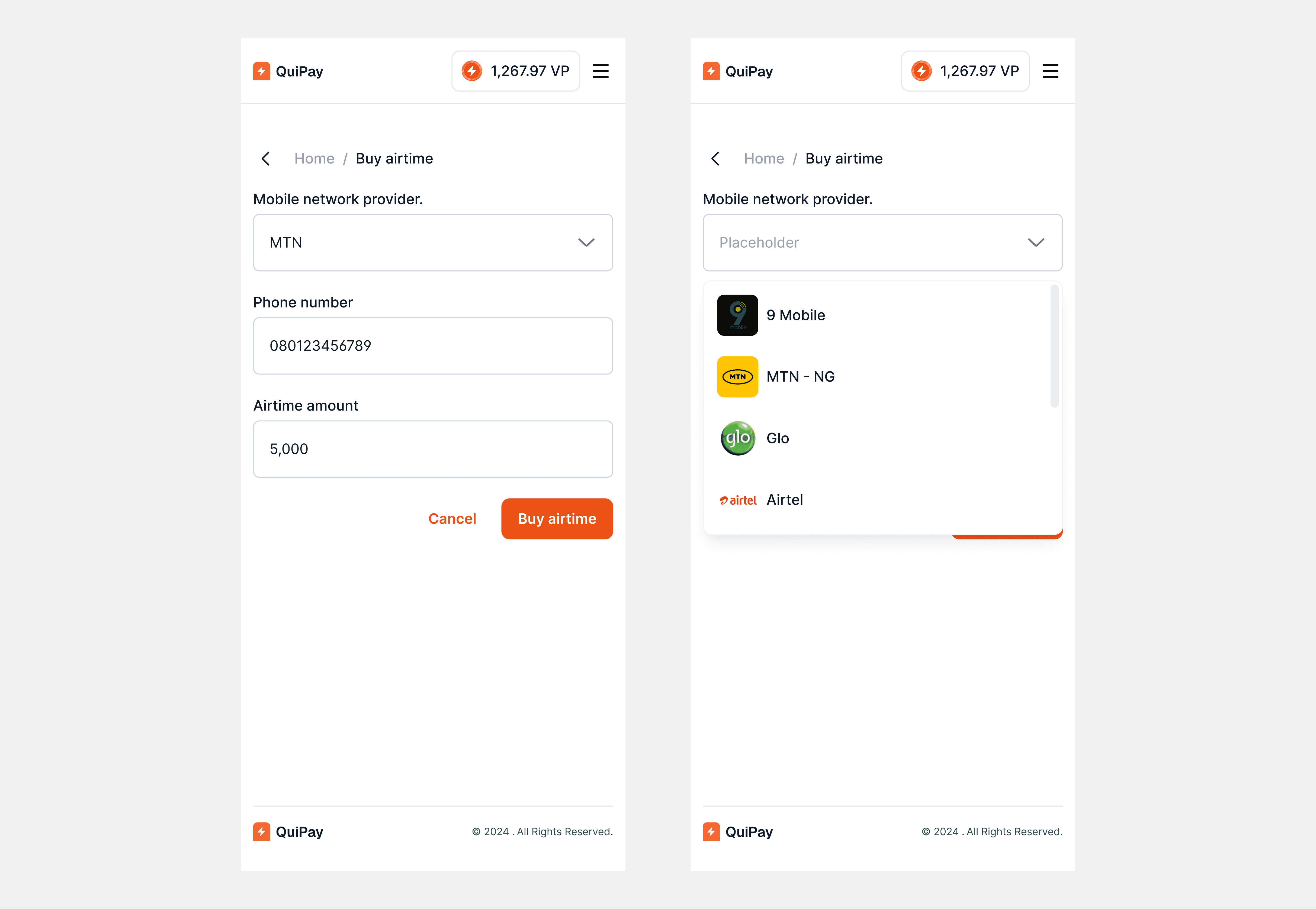
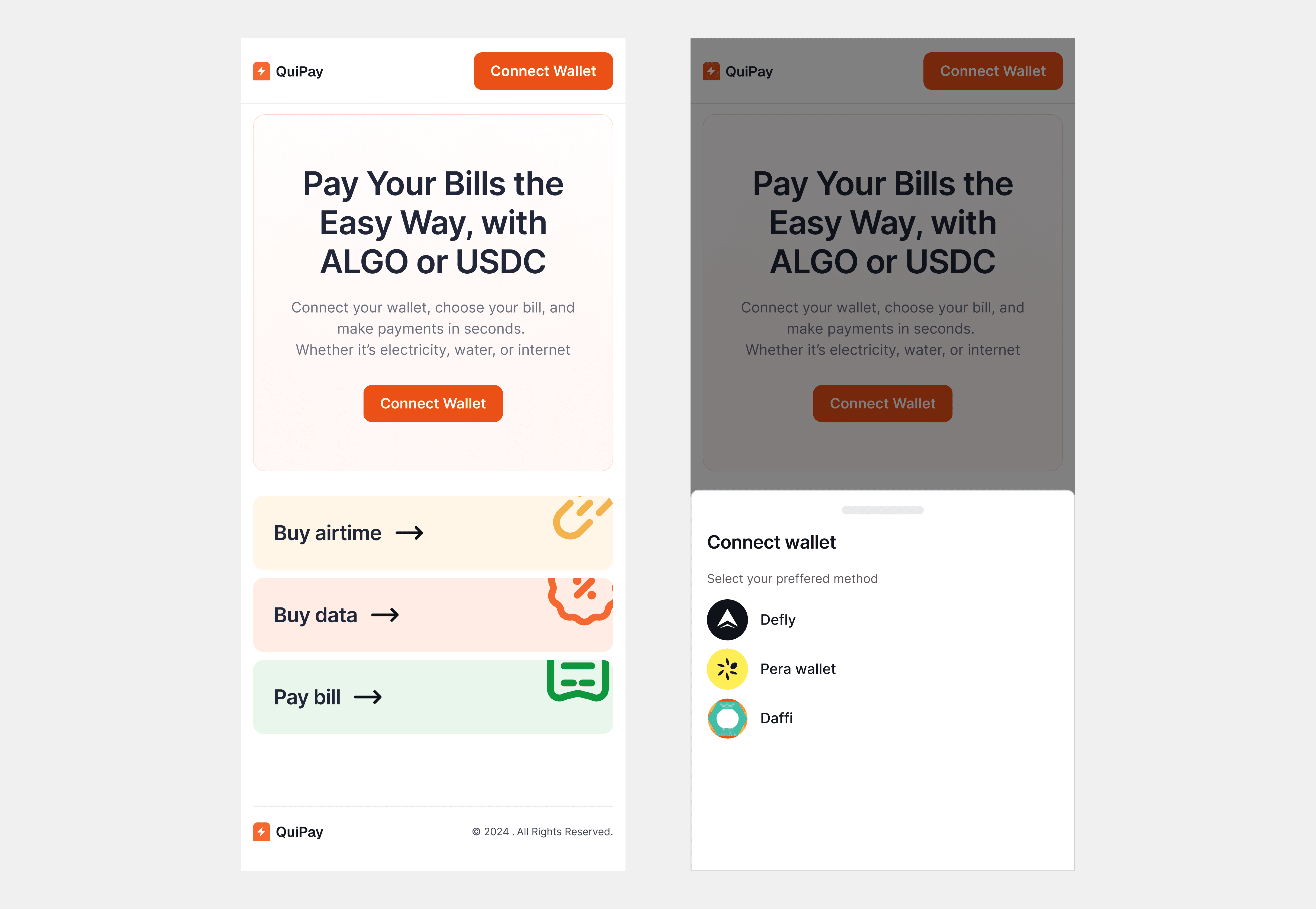
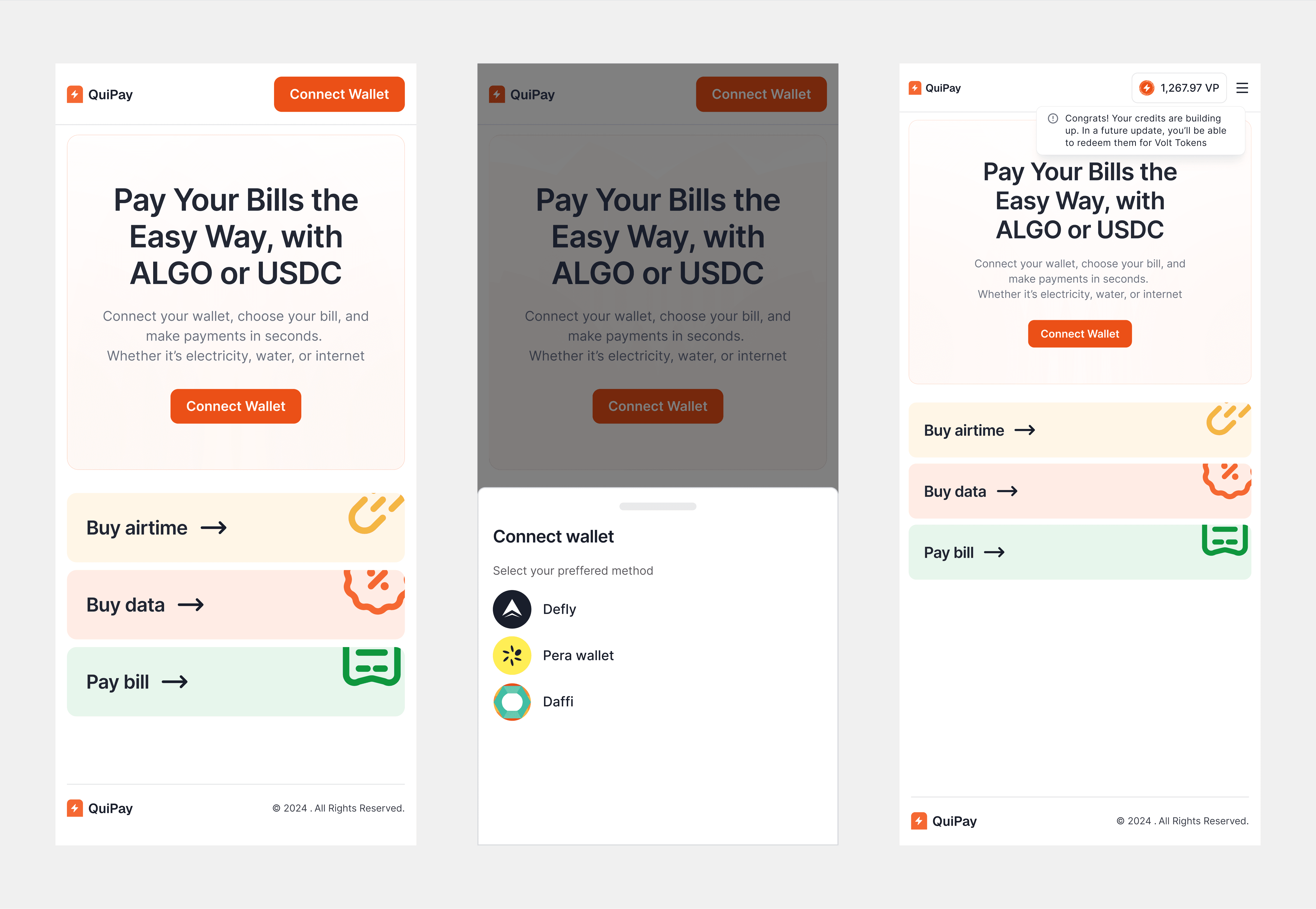
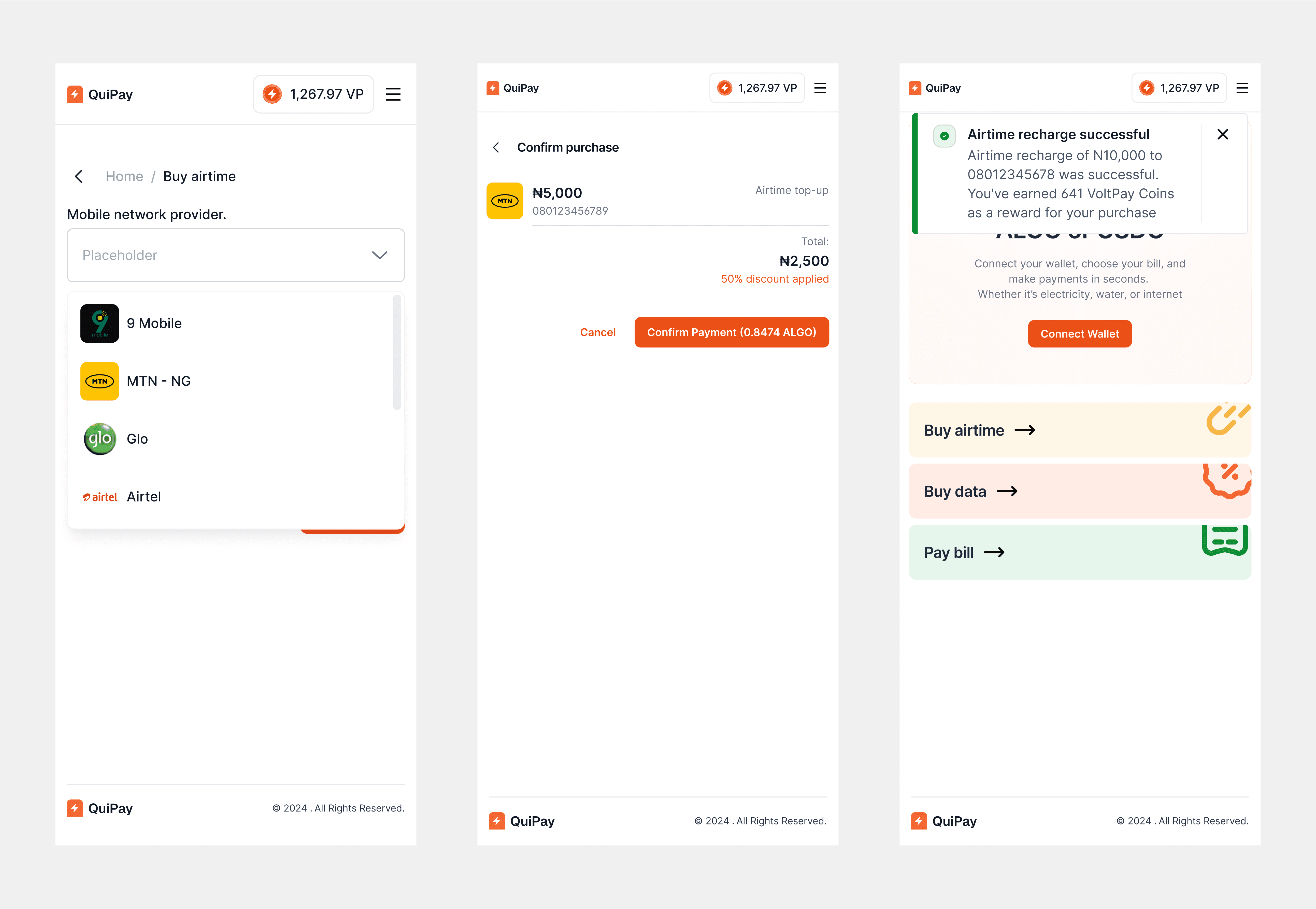
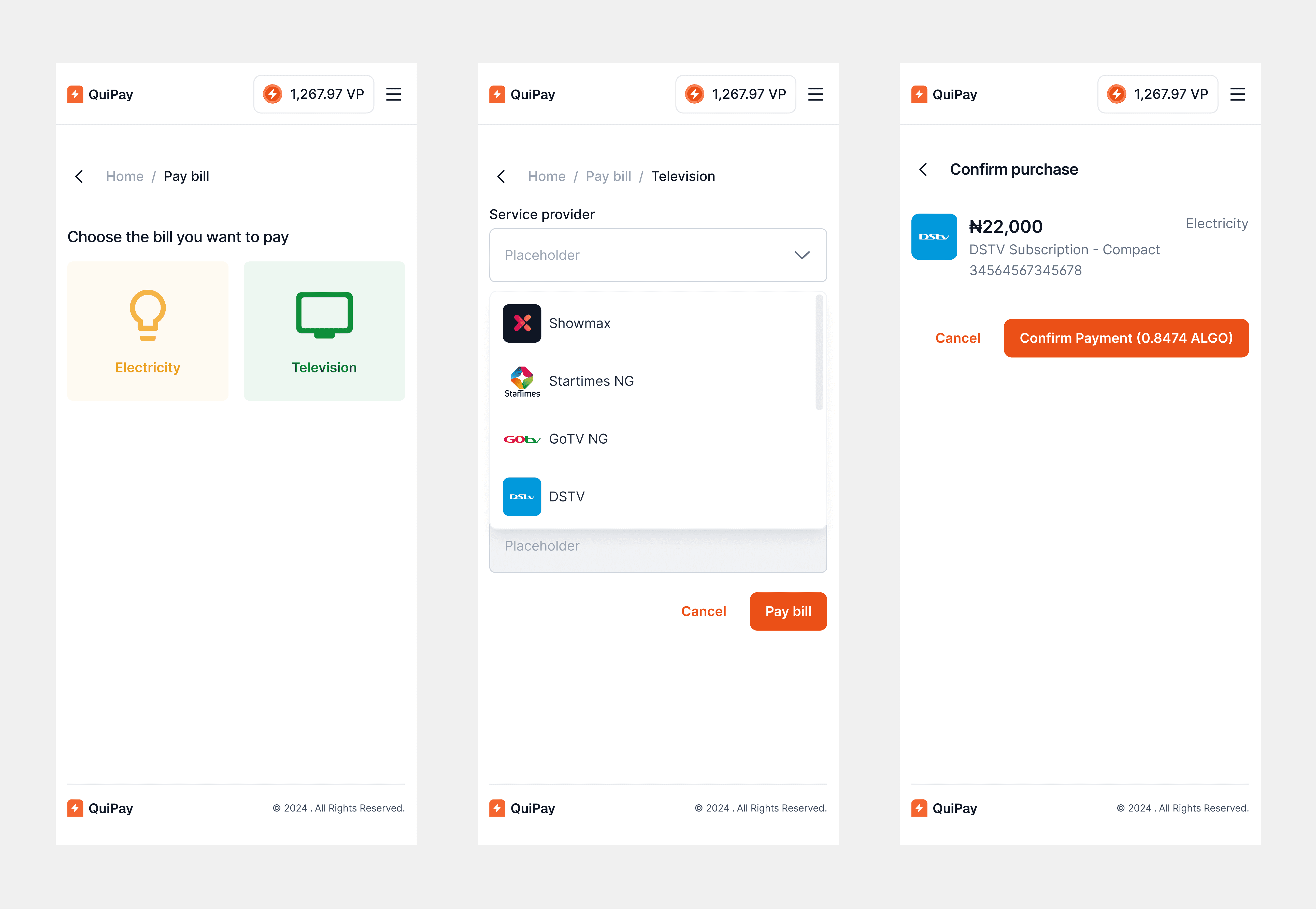
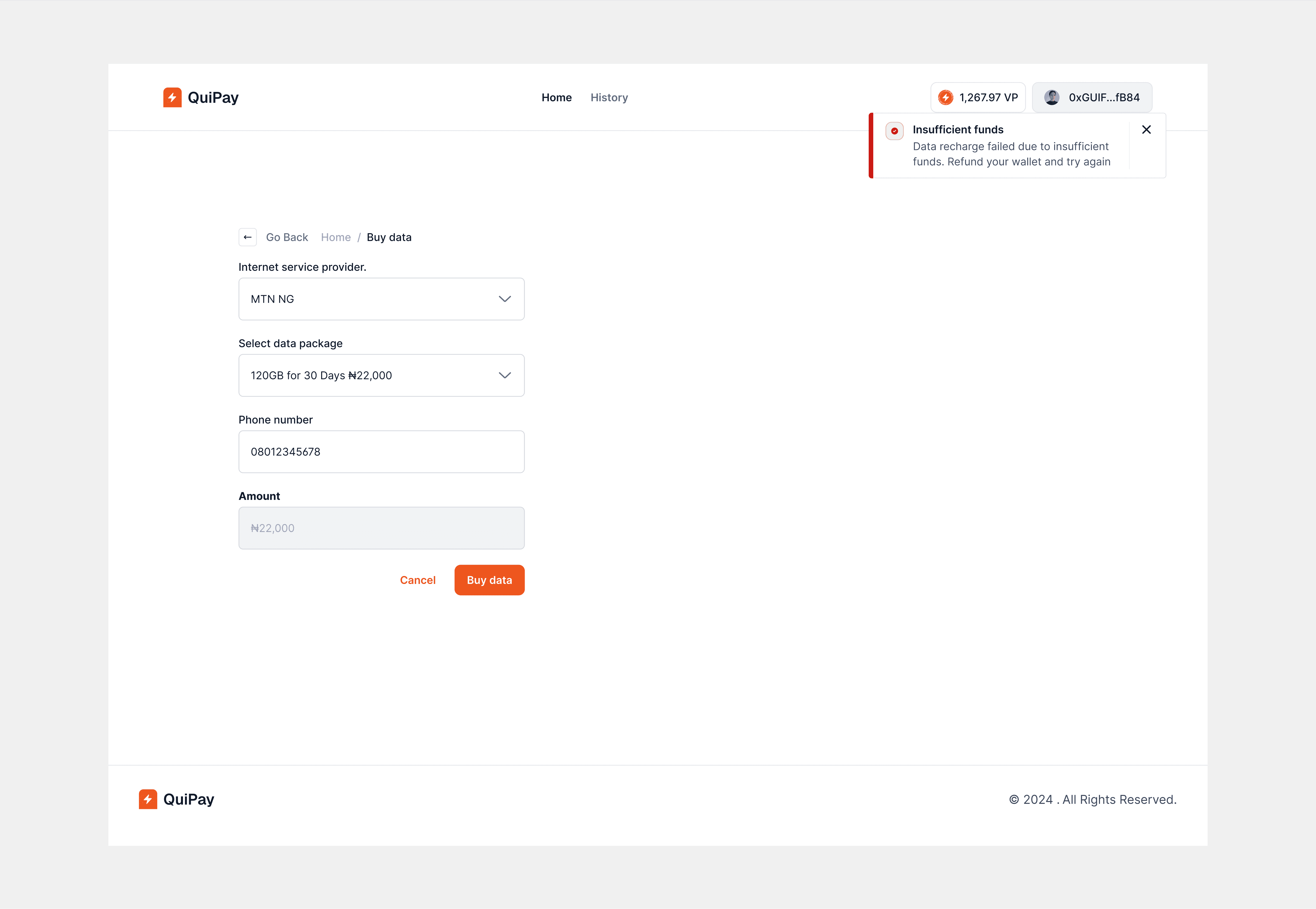
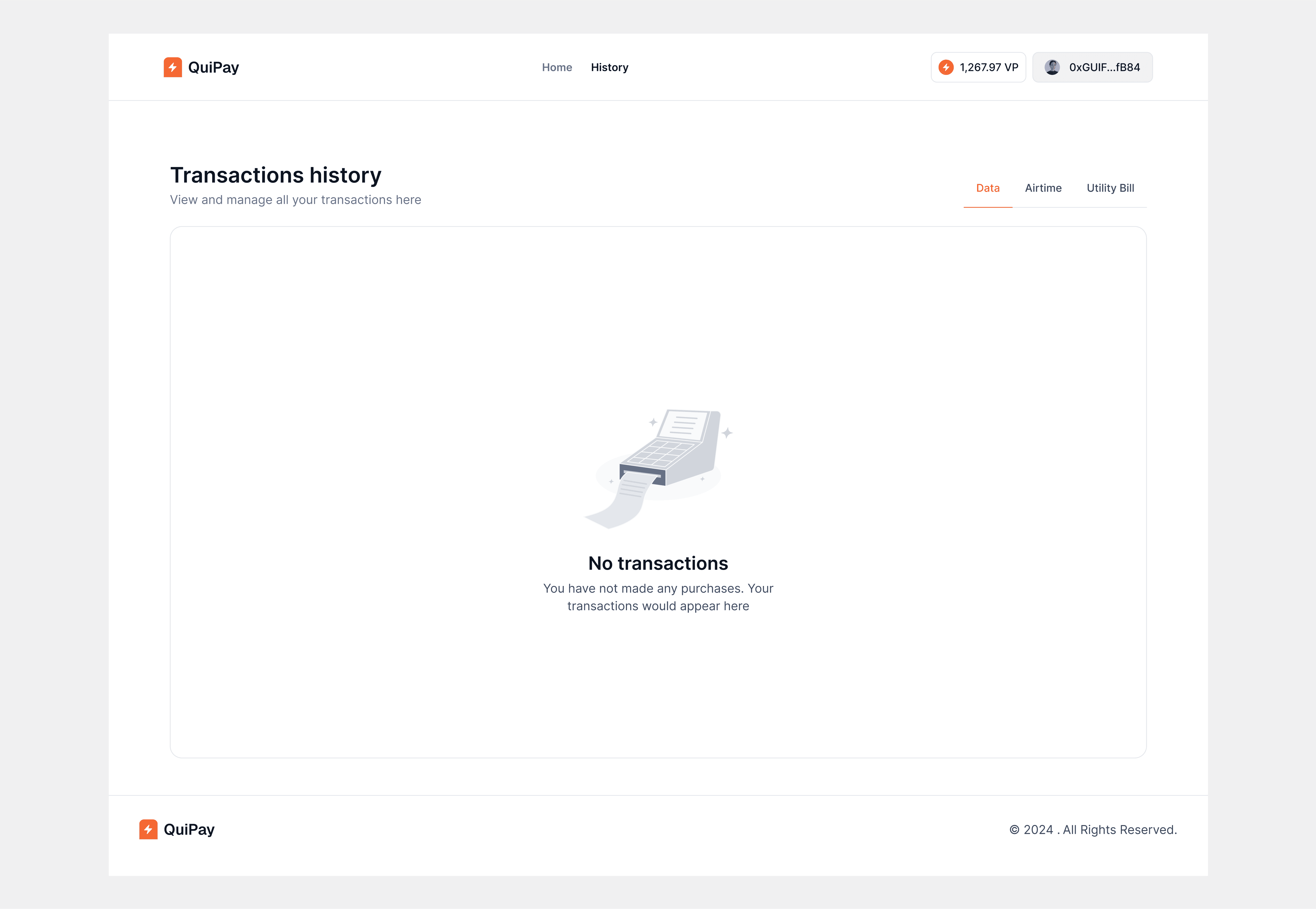
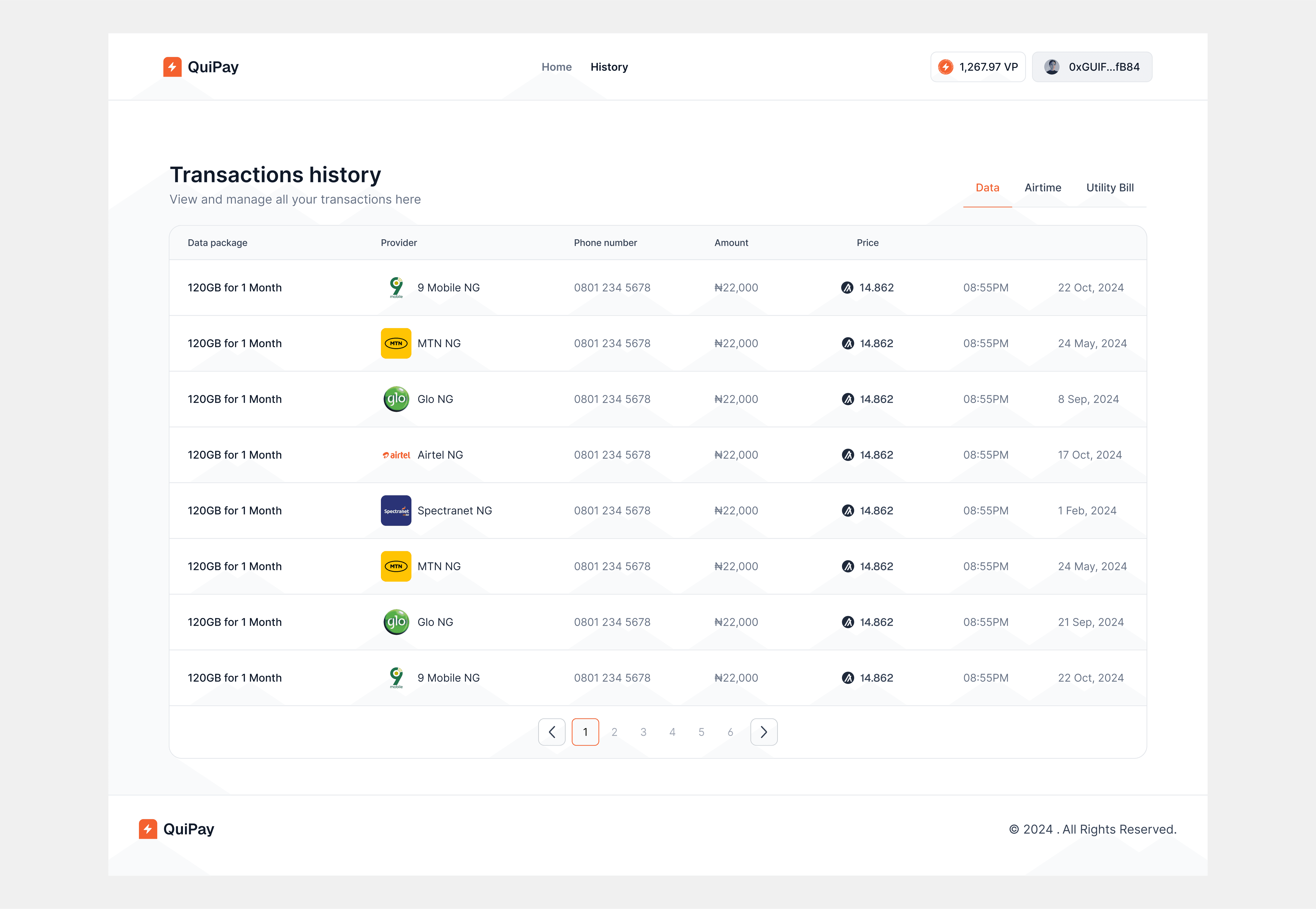
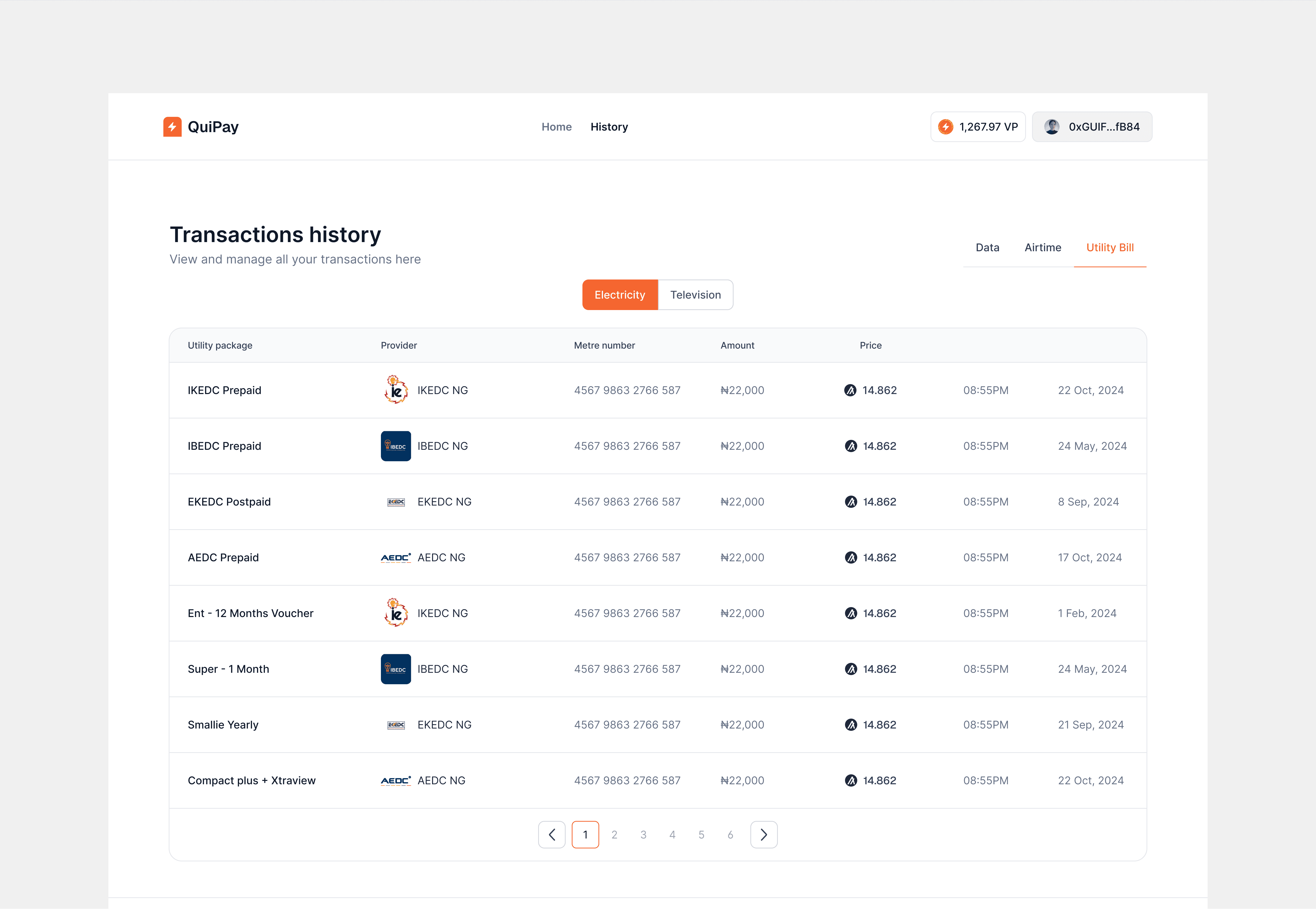
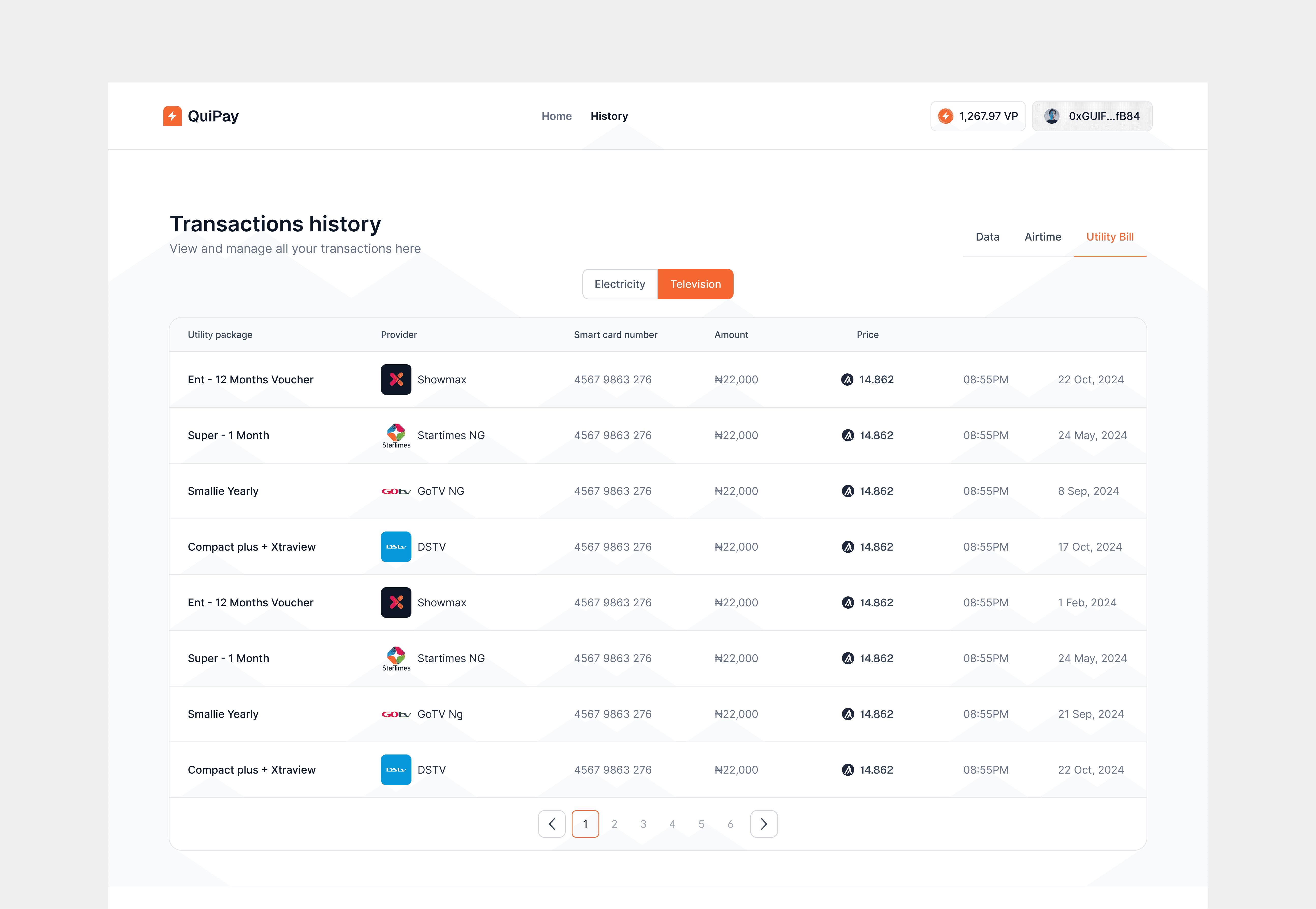
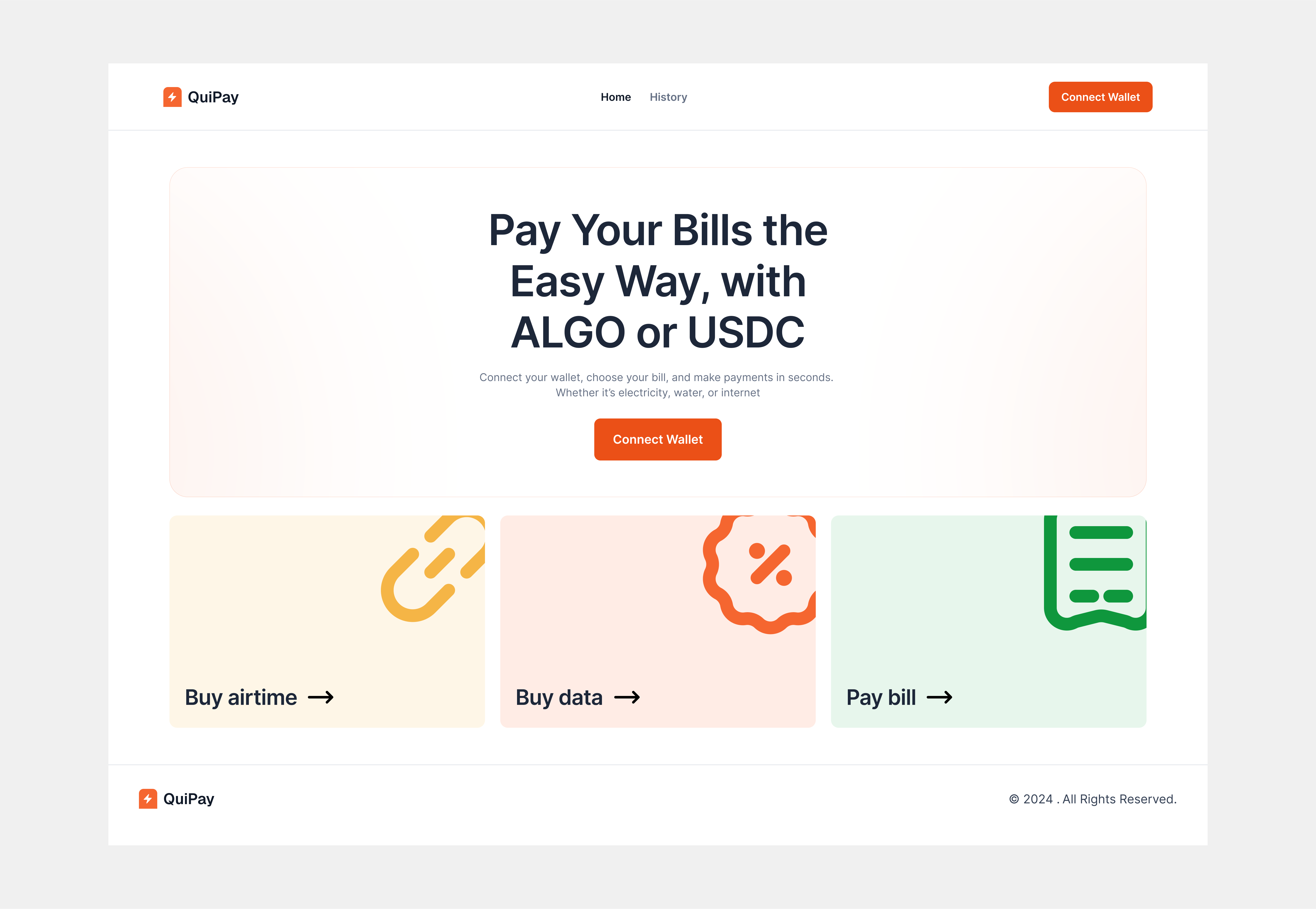
I focused on designing an MVP that shipped with the most impactful features: • Utility selection screen: for choosing services like airtime, data, and bill payments. • Three-step transaction flow: guiding users through input, confirmation, and completion with clarity. • Success confirmation screens: reinforcing trust with instant, transparent feedback. • Dashboard overview: presenting balances and quick access to key actions. • Onboarding flow: easing first-time users into the product with simple steps.
Approach: From Drafts to Syncs with Blockchain Experts
I approached the project by breaking down complexity into digestible flows and validating them with both stakeholders and engineers. How I worked through the process: • Reviewed the product brief and audited both fintech tools and Web3 wallets. • Drafted paper flows to ensure 3-step payments and invisible wallet logic. • Iterated designs in sync with blockchain engineers to align with smart contract constraints. • Designed and tested a Figma prototype, refining based on engineer and stakeholder feedback.
Challenges: Designing for Trust in a Complex Space
Designing QuiPay came with several challenges that tested both my problem-solving and adaptability as the sole designer. Balancing the needs of crypto-savvy users and newcomers, aligning with regulatory realities in Nigeria, and ensuring a smooth MVP rollout required careful iteration and decision-making. • Trust & onboarding: Addressed user concerns around safety and usability by introducing clear onboarding flows and transparent transaction feedback. • MVP scope pressure: Managed scope tightly to prioritize the most impactful features for launch without overcomplicating the first release. • Regulatory uncertainty: Navigated unclear crypto policies in Nigeria by designing flexible flows that could adapt to compliance requirements.
Solution: Crypto Bills Payments Made Easy
The final design brought Web3 into a familiar, trusted format. Users could pay for airtime, electricity, cable, or internet with just a few taps, no blockchain knowledge required. Key design decisions: • Invisible blockchain: wallet connection states documented but abstracted into finance-first interfaces. • Visual clarity: success animations to reinforce trust, large confirmation states to reduce anxiety. • Progressive disclosure: bill provider logos upfront, gas fees highlighted only at confirmation. • Built for scale: a Figma system with Auto Layout, reusable components, and well-documented states for smooth dev handoff.
Results: Launched MVP, Secured Funding
The MVP went live in Nigeria and received early validation, including funding from Algorand Nigeria. • Practical utility: brought crypto into daily life through everyday bills. • User value: reduced cognitive load and built trust with clear confirmations. • Business value: delivered a market-ready MVP that developers could scale quickly. • Collaboration value: smooth designer–engineer workflow with detailed interaction documentation. • Market validation: successful launch with investor backing from Algorand Nigeria.
Next Steps: Scaling the Experience
As the designer, my next priorities would be: • Expanding the utility categories to cover more everyday services. • Introducing fiat onramps to attract users still new to crypto. • Strengthening the design system to support new features and faster iteration. • Conducting usability testing with both crypto-savvy users and newcomers to fine-tune the onboarding flow.
Other projects
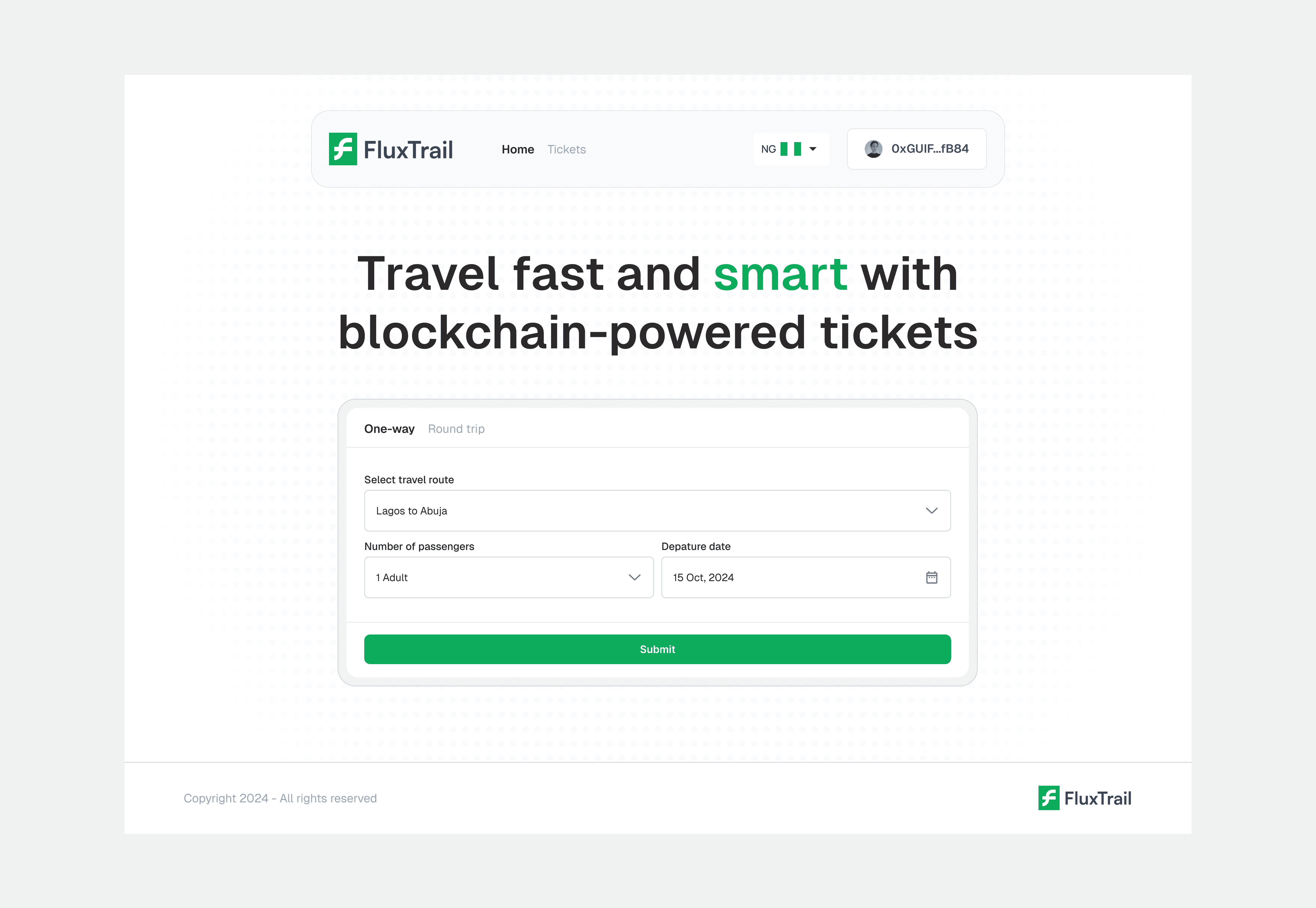
FluxTrail – Decentralizing Transport Ticketing on the Algorand Blockchain
Designed a decentralized transport ticketing platform, streamlining ticket validation, reducing fraud and enabling anonymous travel
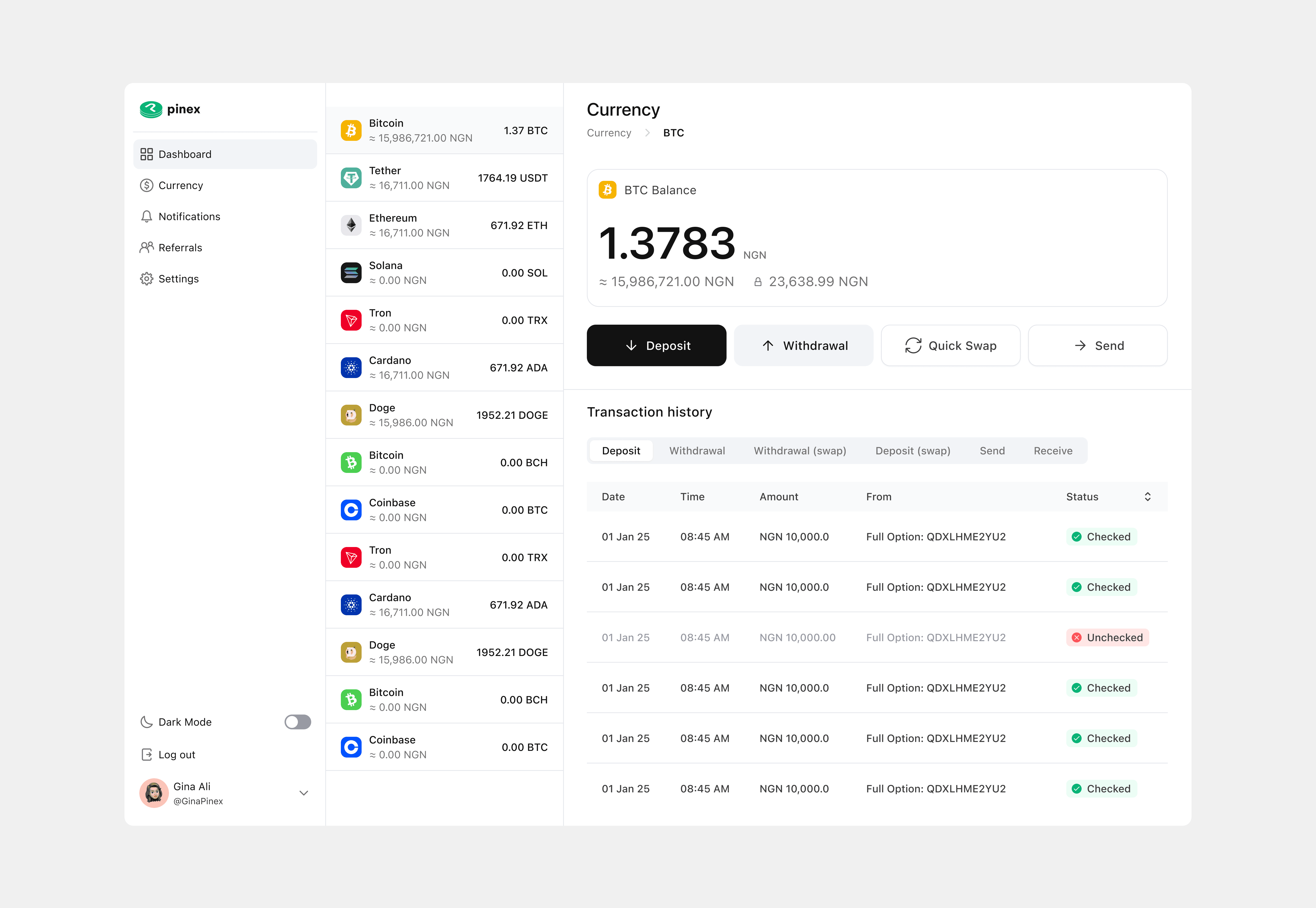
A Crypto Exchange That Almost Was: Lessons from Designing a Multi-Currency Crypto Exchange
Designed a market-fit crypto experience that simplified deposits, swaps, and withdrawals
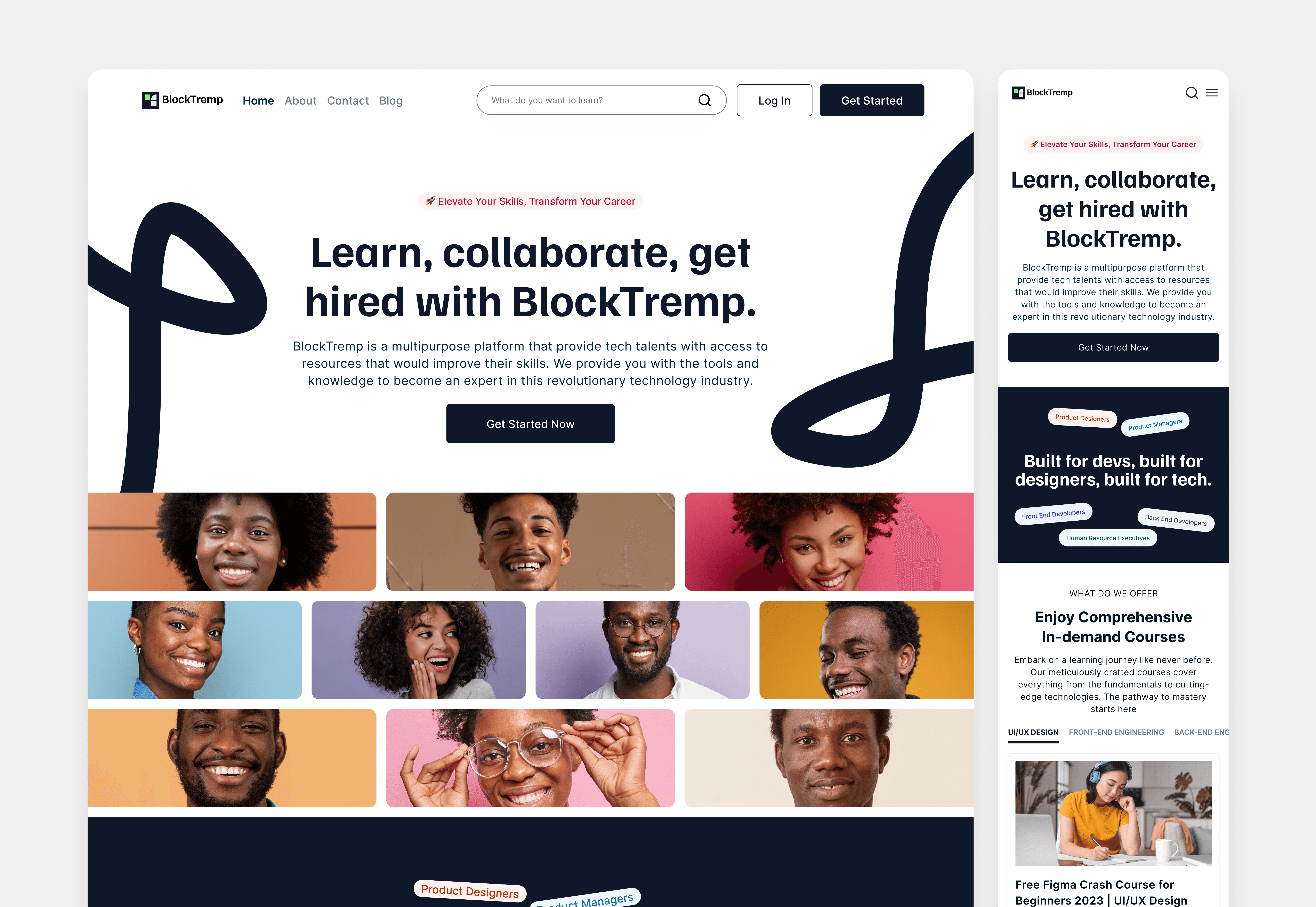
My 2+ Year Journey at BlockTremp, Designing Learning Experiences that Drove Real Results and Industry Recognition
Led Product, Marketing & Brand Design at Africa BlockChain Alliance on a project called BlockTremp; making tech education accessible to everyday users
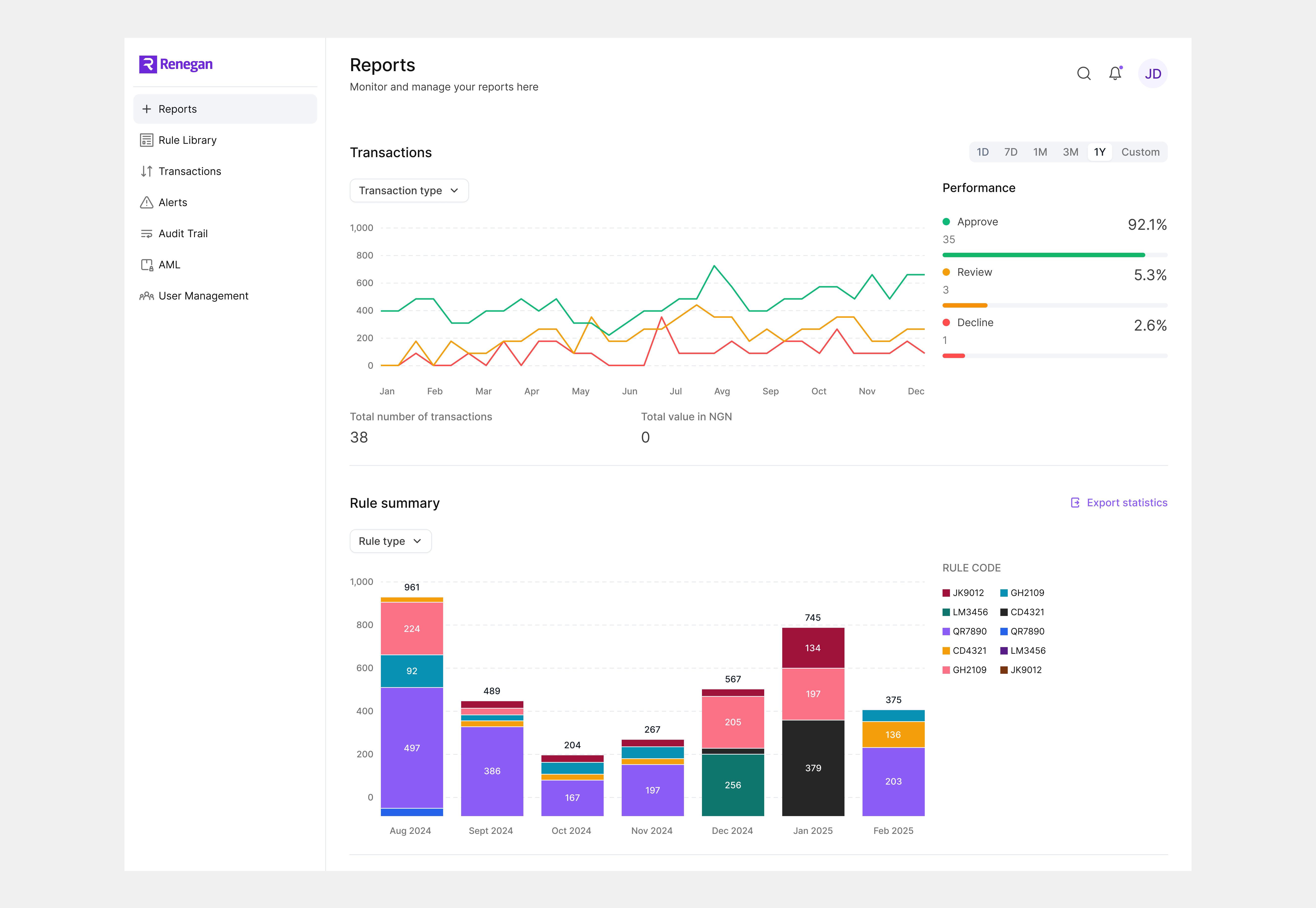
Renegan – Designing a Real-Time Fraud Detection Platform for Banks and Fintechs
Designed Renegan's end-to-end fraud monitoring platform from the ground up—dashboard, rule builder, alerts, AML screening, and onboarding—helping banks and fintechs detect fraud in real-time before launch.
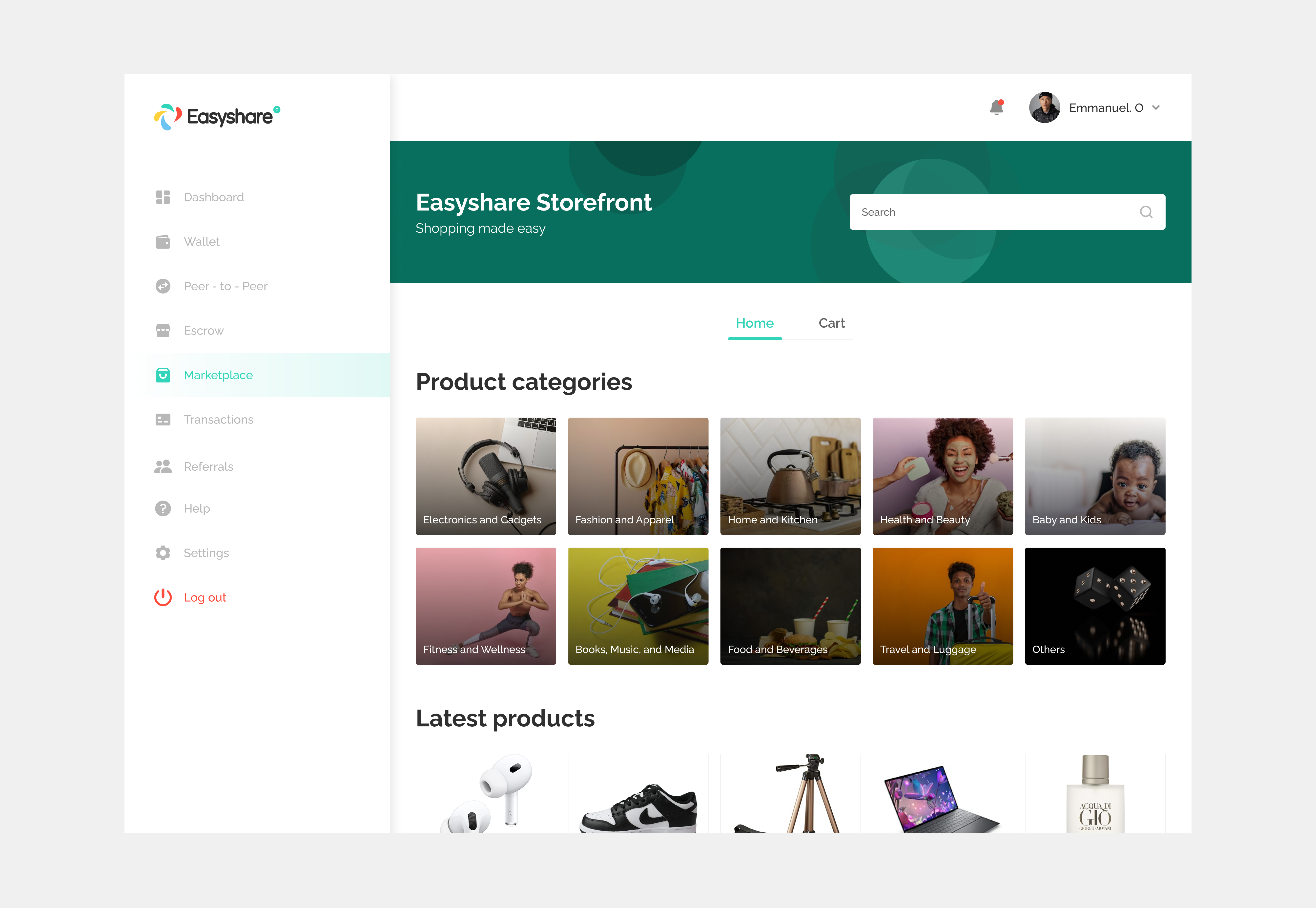
Easyshare.Global – Remodelling the Invoicing Experience to Fit New Business Goals
Redesigned Easyshare's invoicing system to reduce seller friction, introducing Invoice Clone and Seller Storefront features that drove 30% faster invoice creation and 25% increase in monthly active users.