Easyshare.Global – Remodelling the Invoicing Experience to Fit New Business Goals
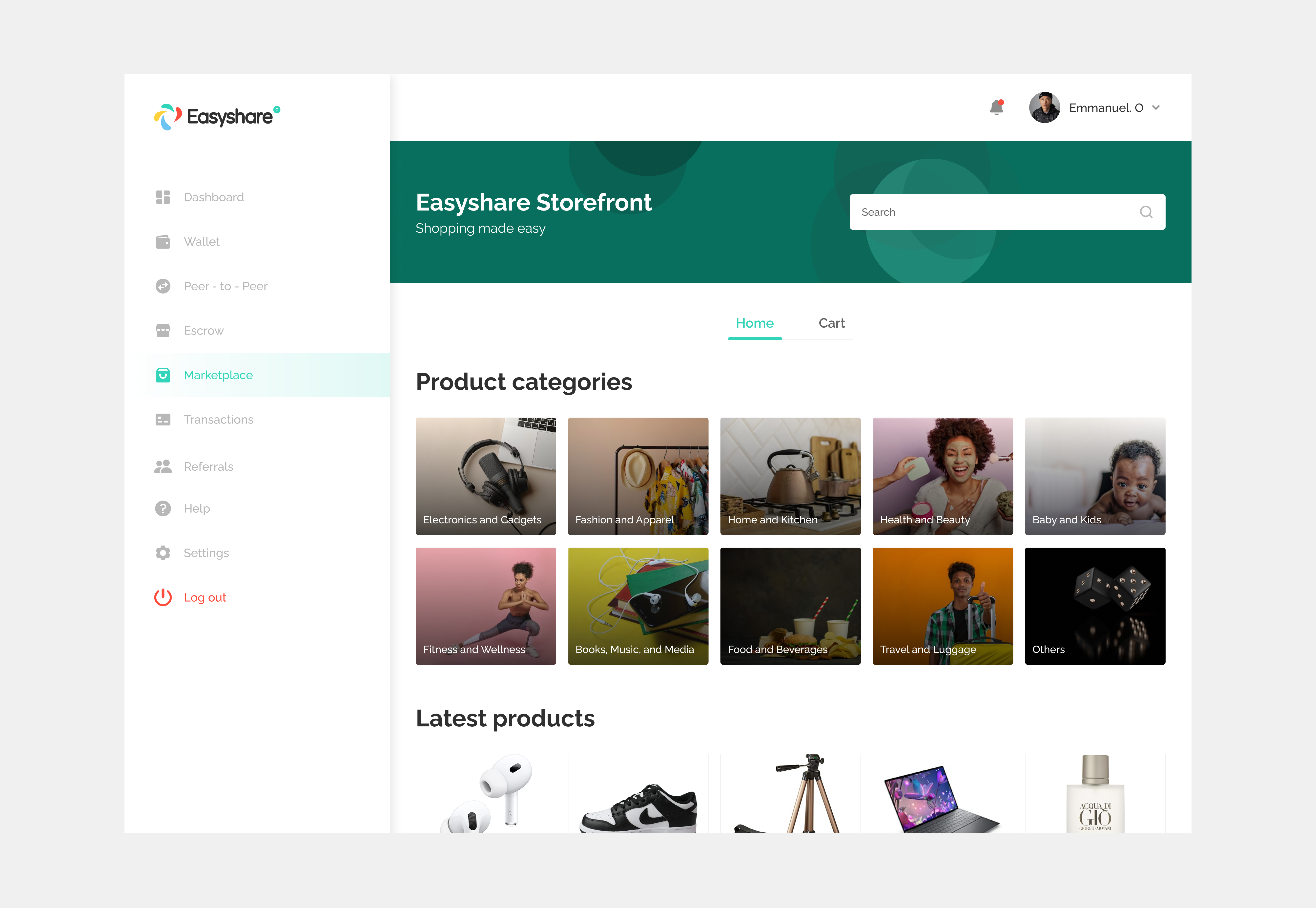
Summary: From Pain Point to Revenue Opportunity
This case study outlines our journey from identifying a user pain point to implementing an innovative solution that not only solves the problem but leverages a market opportunity to generate more revenue for the company. Team: • Kolawole Victor - Product Designer • Omojo Negedu - Product Manager • Bamidele Alegbe - Chief Technology Officer • Timothy Ogwulumba - Front-End Engineer • Damilola Dolor - Back-End Engineer
Problem: Inefficient Invoice Generation for Identical Orders
In response to user feedback, we identified a pain-point in our invoicing system. Sellers are required to generate a new invoice for each individual purchase transaction. This process becomes particularly cumbersome when multiple buyers express interest in purchasing the same item, necessitating the creation of multiple invoices for identical products.
Design Preview
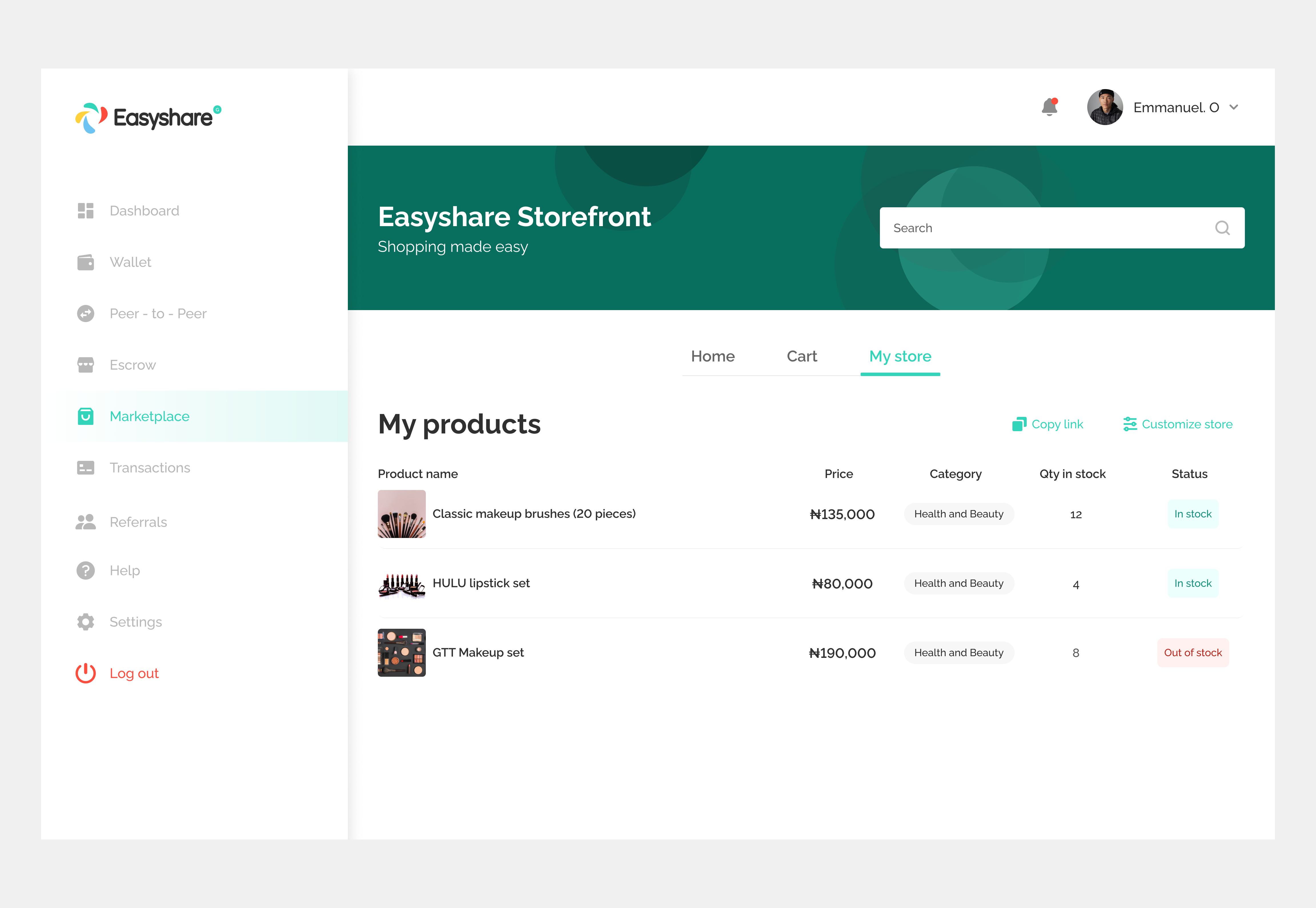
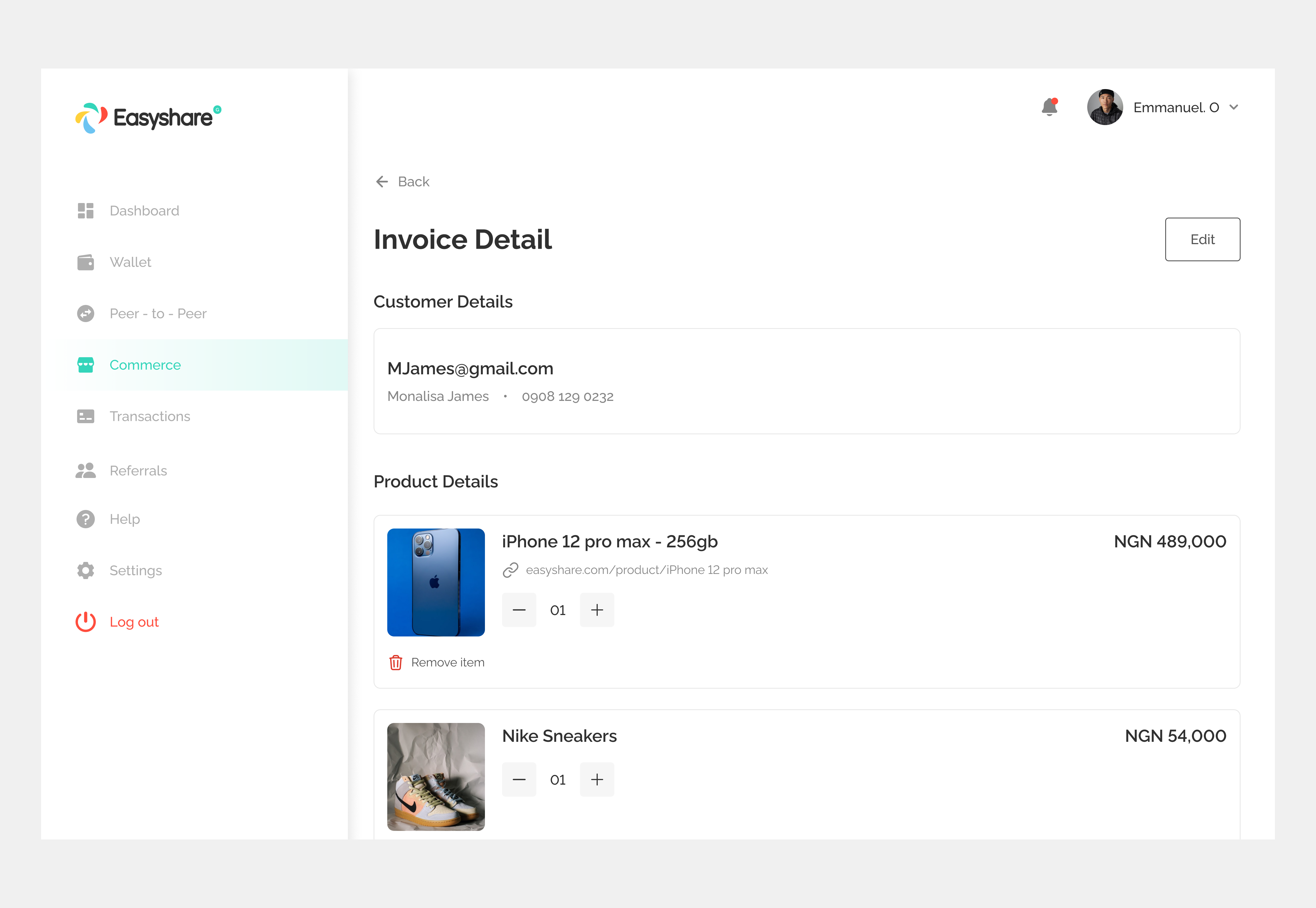
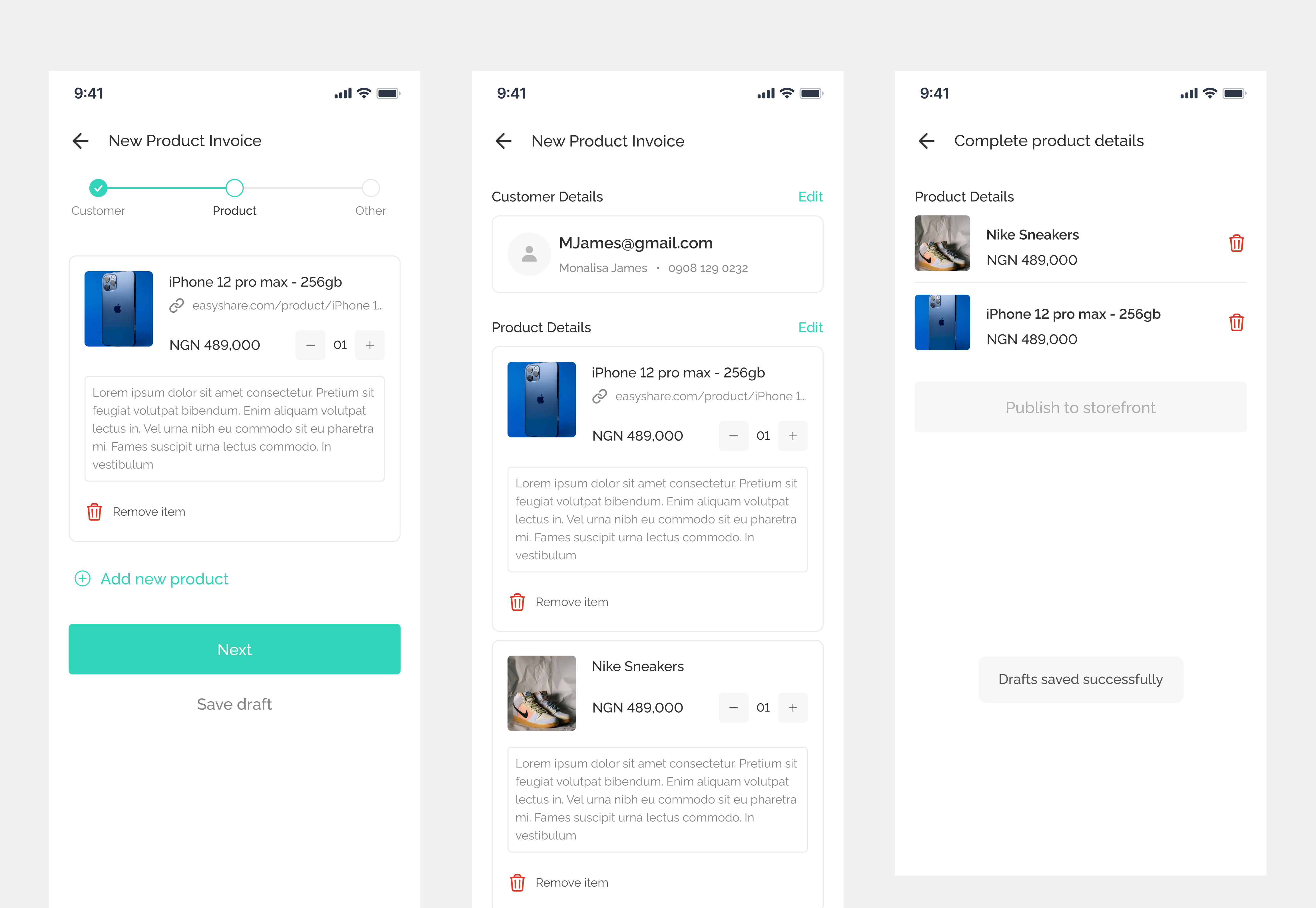
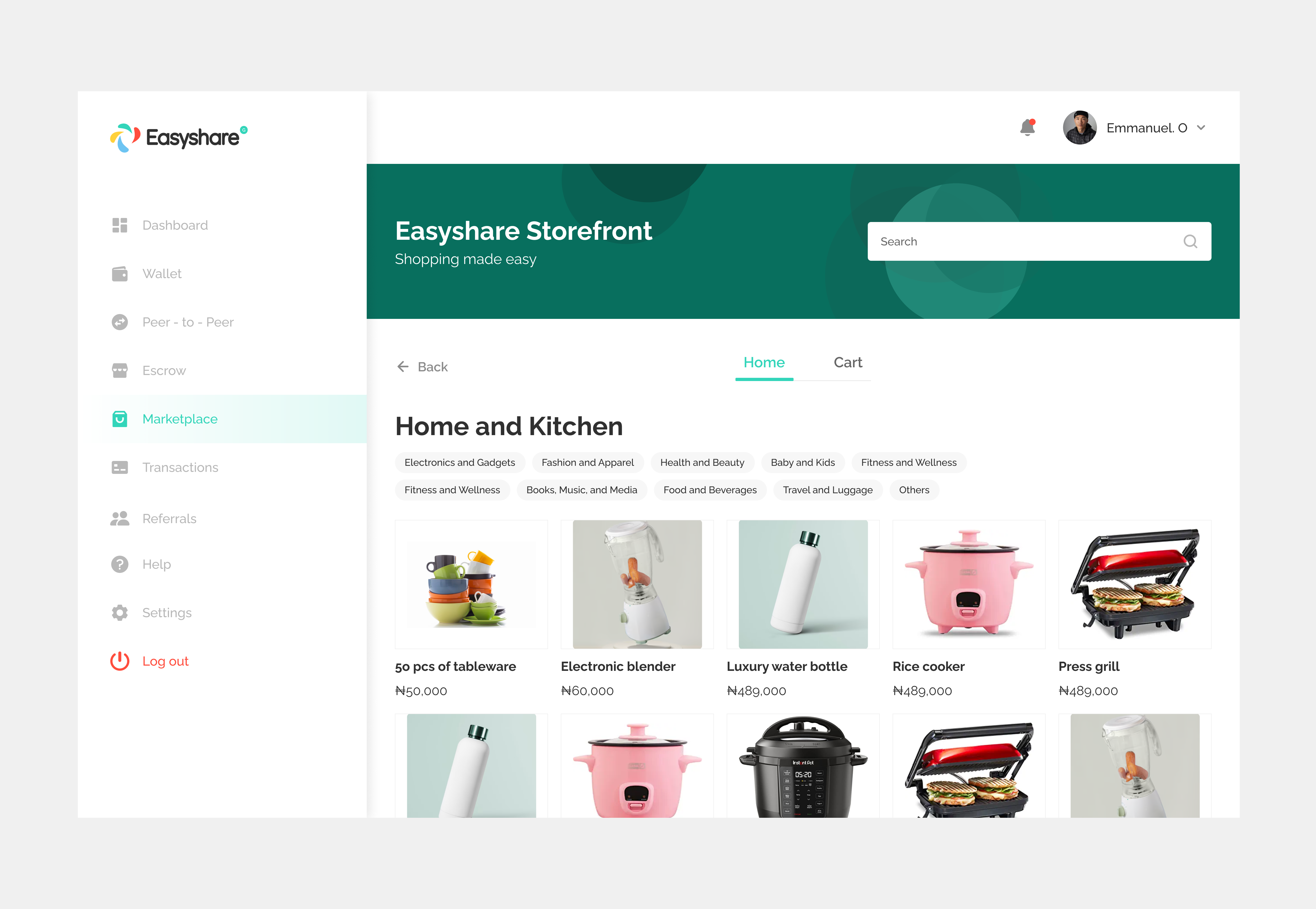
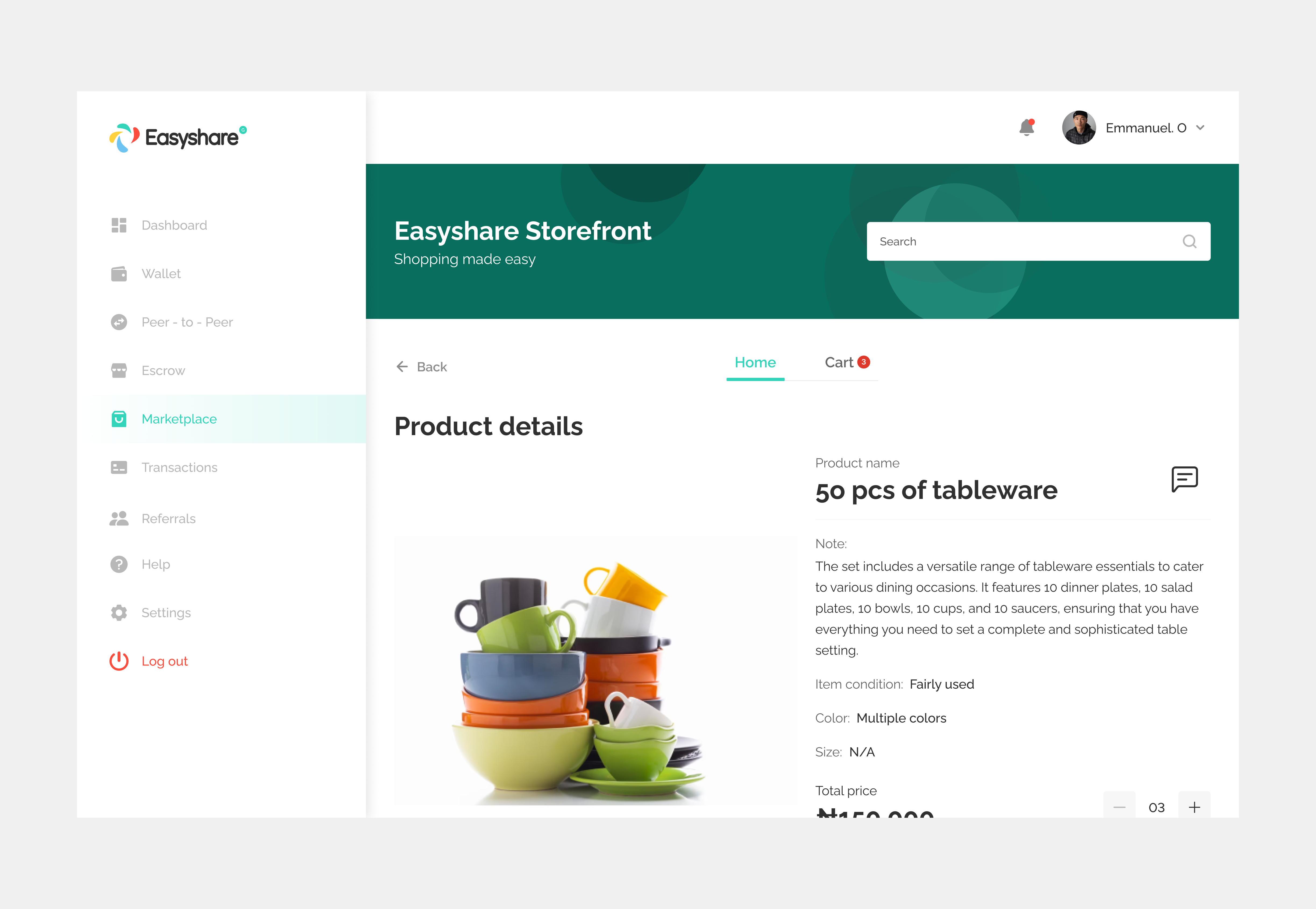
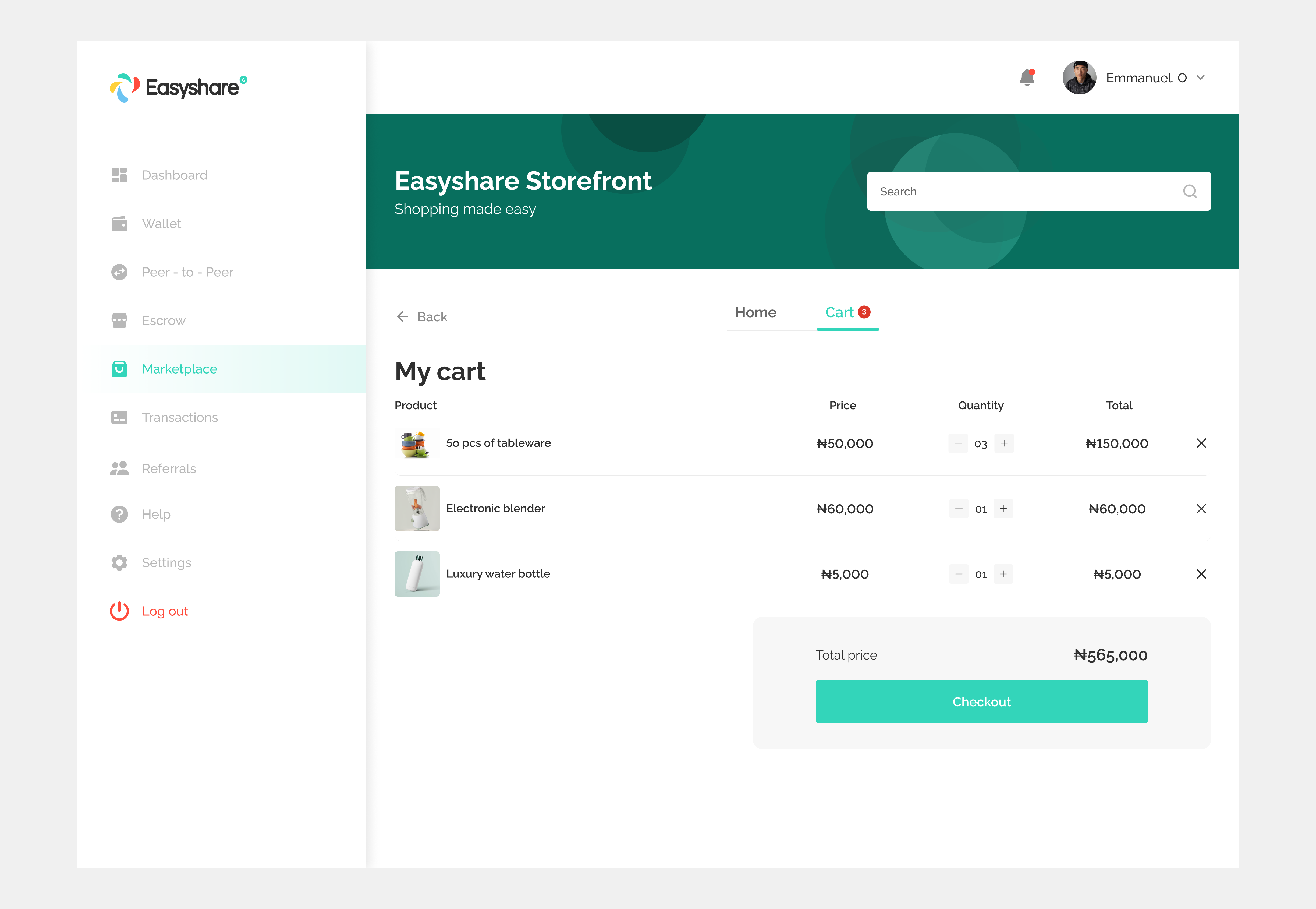
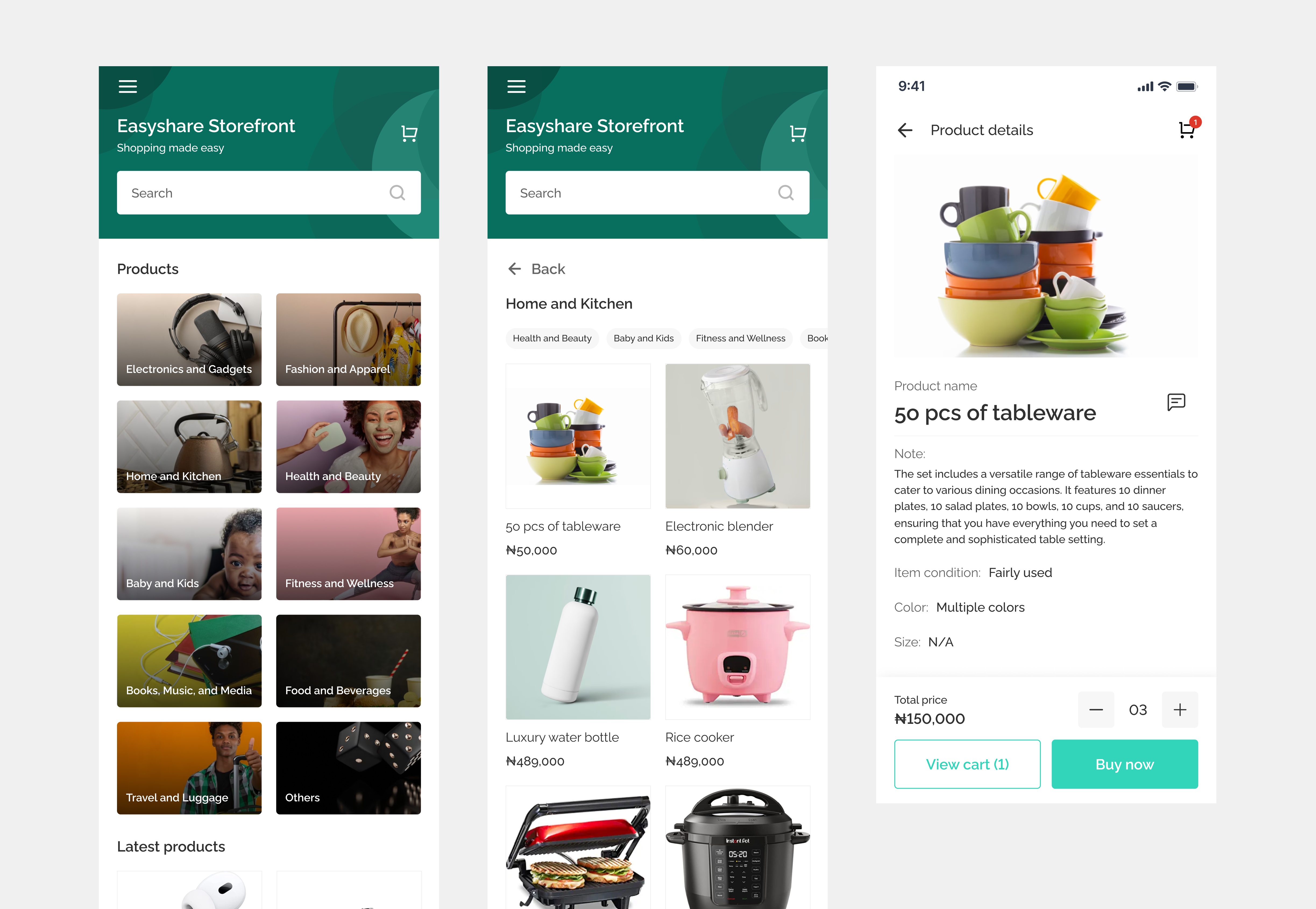
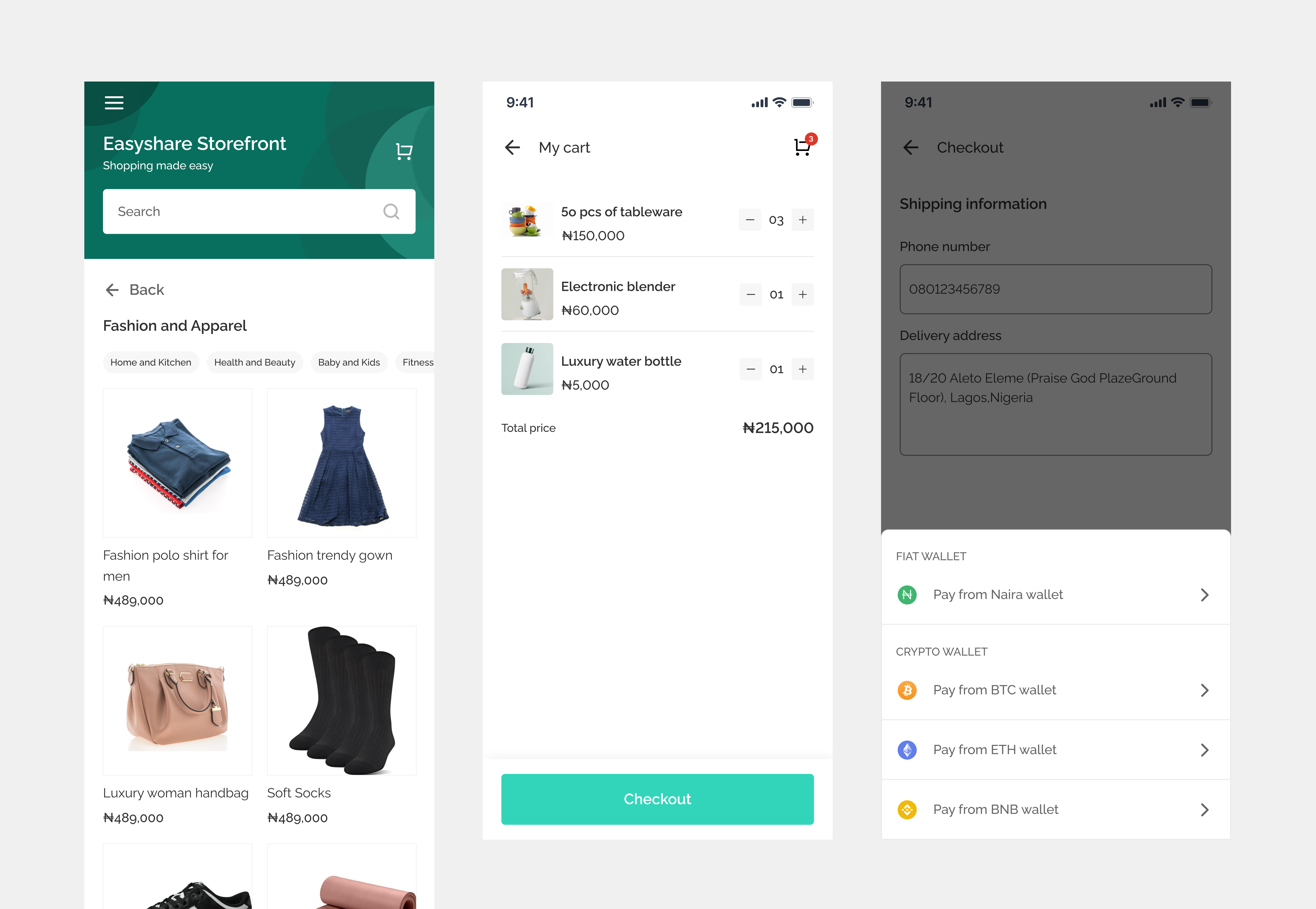
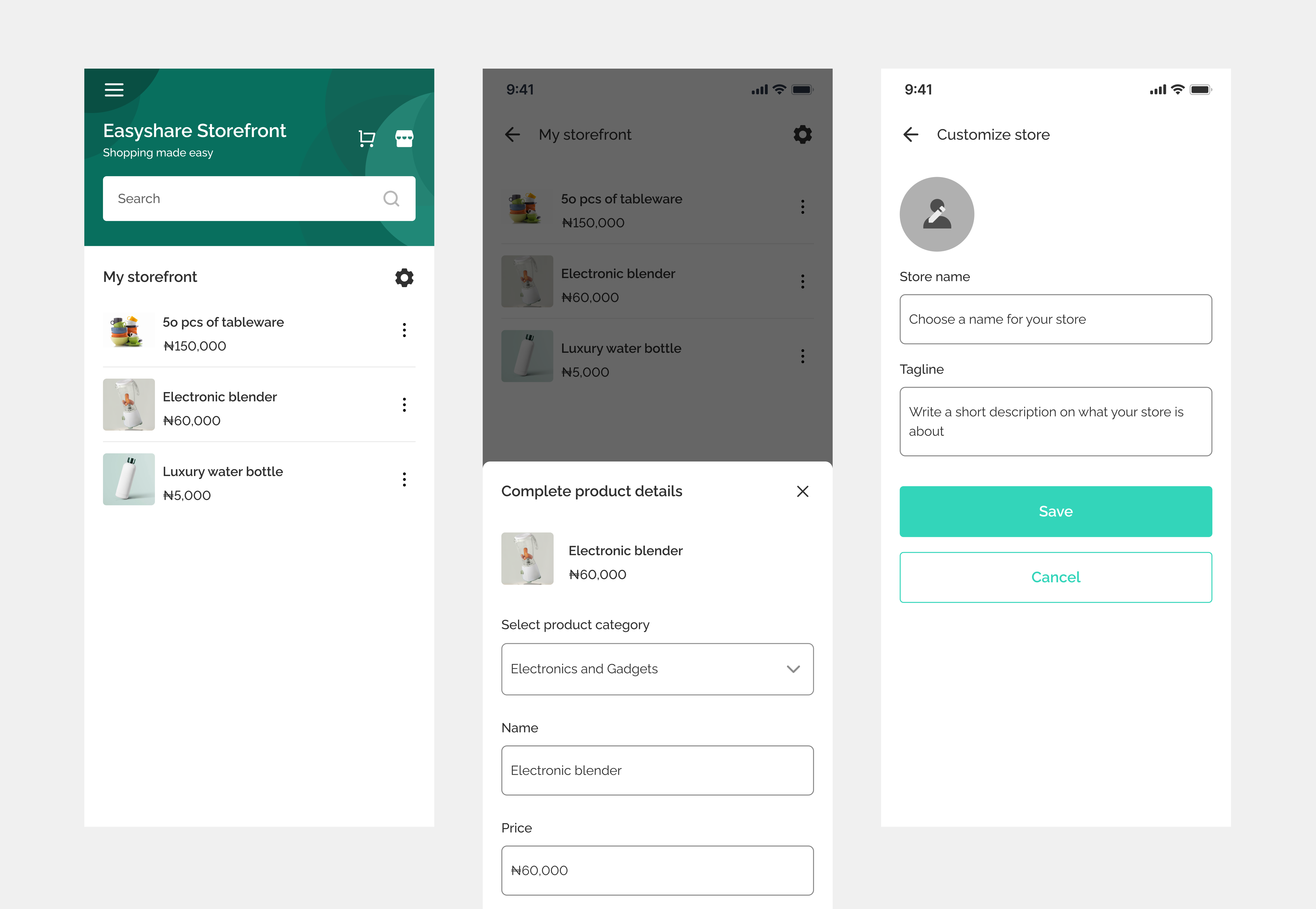
A glimpse of the key solutions: • Invoice Clone feature for quick duplication • Seller Storefront for product-based sellers • Marketplace for buyers to browse products • Mobile-responsive experience
Approach: Secondary Research and Competitive Analysis
To address the limitations in primary user research, I relied heavily on secondary research and competitive analysis. My secondary research involved examination of existing studies, reports, and available user data related to our project's context. Findings: • Product Categorization: Successful platforms have clear and well-structured product categories • Simplified Checkout Process: Competitive platforms maintain a streamlined checkout process • User-Centric Navigation: Successful ecommerce platforms prioritize user-centric navigation
Challenges: Scope & Constraints
Technical Constraint: The team did not have the bandwidth, time or budget to build a full standalone e-commerce solution. Our solution had to be seamlessly integrated with invoice creation; such that sellers upload products to the storefront by first creating an invoice. Limited User Research: Due to time and budget limitations, the team was unable to engage in the depth of user interviews, surveys, and observations typically associated with thorough primary research.
Solution: Two Solutions for Distinct User Groups
Invoice Clone: Simplify invoice creation by allowing sellers to clone existing invoices and modify the recipient details, significantly reducing the time and effort required to process identical product orders for various customers. Seller Storefront: Empower sellers to create their online storefronts. Instead of manually generating invoices for each purchase, sellers can easily upload products to their dedicated store, simplifying the purchasing process and boosting overall sales efficiency. Why two solutions? The invoicing system proved ideal for freelancers and service providers handling ~20 invoices per month. However, for users selling physical products with high volume of sales, the invoicing system posed challenges. The seller storefront eliminates the need to generate an invoice for every order received. Design Goals: • Seamless Onboarding: Minimize the learning curve for sellers making the switch • Simplified Product Categorization: Make it easy for customers to locate and purchase items • Sharing Convenience: Easy way for sellers to share their store with potential buyers
Results: Measurable Impact on Efficiency and Engagement
• Improved Efficiency for Sellers: On average, sellers experienced a 30% reduction in the time required to create invoices after the implementation of the "Invoice Clone" feature. • Growth in User Engagement: The platform witnessed over a 25% increase in monthly active users in the first few months following the updates. • Enhanced User Experience: Following the introduction of the "Seller Storefront" feature, there was a noticeable improvement in user satisfaction, as evidenced by direct user feedback.
Lessons Learned & Retrospective
Lessons Learned: • User feedback is invaluable in identifying pain points and opportunities for improvement • Not all users have the same requirements - solutions must reflect this diversity • Design is an iterative process; ongoing refinement based on user insights is essential In Retrospect: • Early User Involvement: Involving users even earlier would have shaped the project direction more profoundly • Agile Development Approach: More frequent feedback loops and quicker adjustments • Thorough A/B Testing: More rigorous testing to precisely measure the impact of individual changes • Improved Dev Team Collaboration: Clearer and more direct communication with developers
Other projects
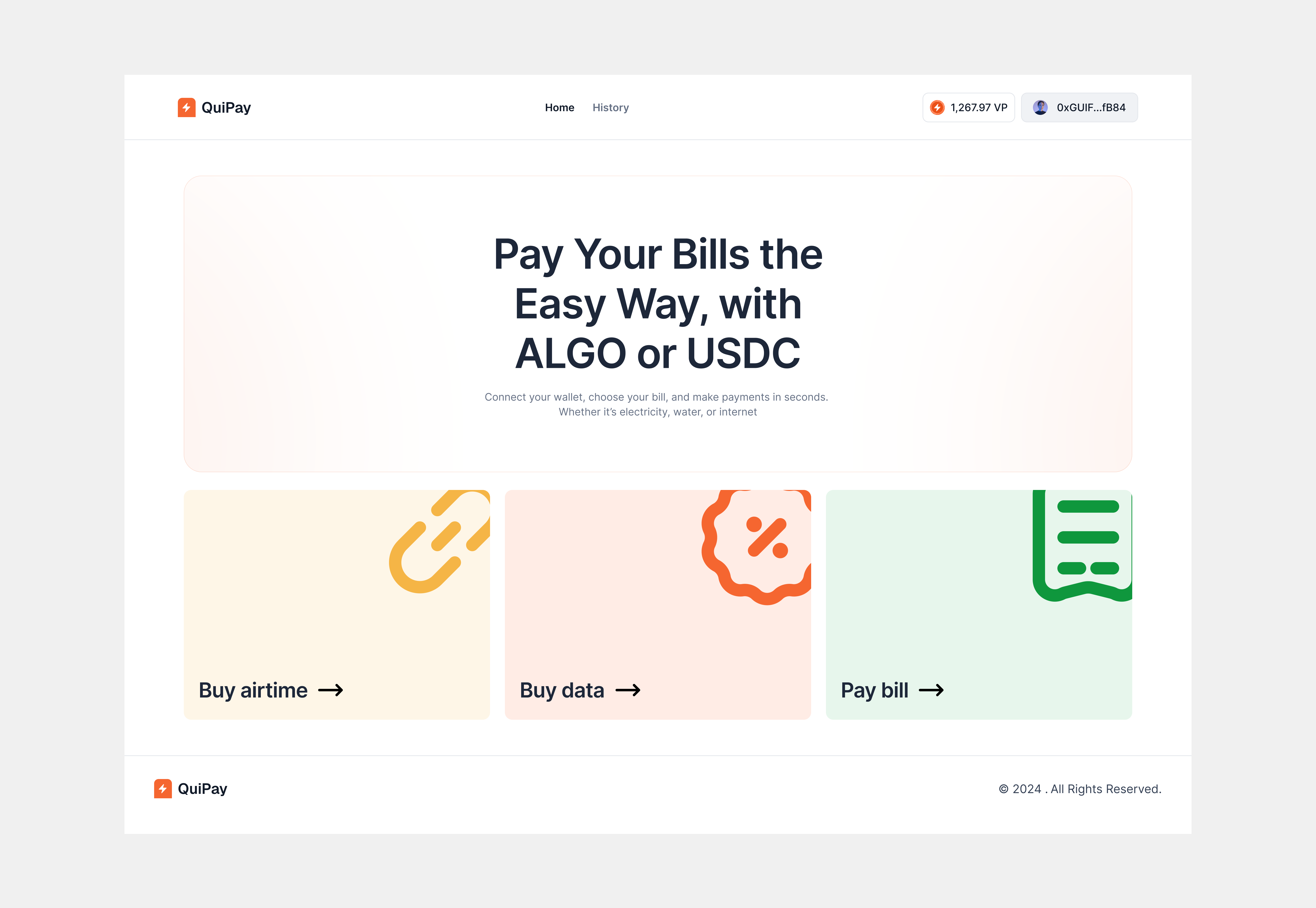
QuiPay – Designing Seamless Everyday Bill Payments with Crypto
Designed QuiPay's fintech experience to simplify payments, boost user confidence, and drive higher transaction completion rates
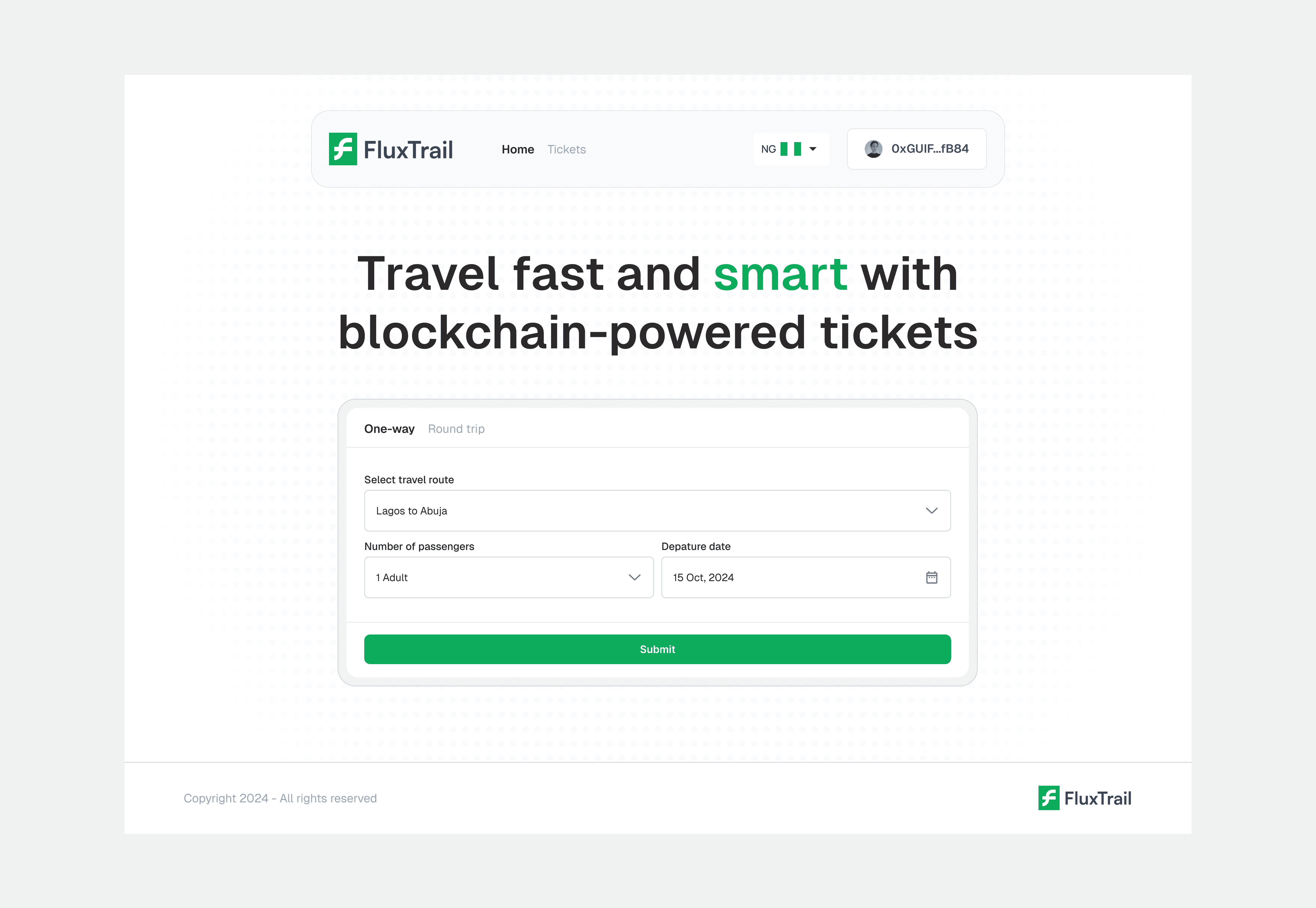
FluxTrail – Decentralizing Transport Ticketing on the Algorand Blockchain
Designed a decentralized transport ticketing platform, streamlining ticket validation, reducing fraud and enabling anonymous travel
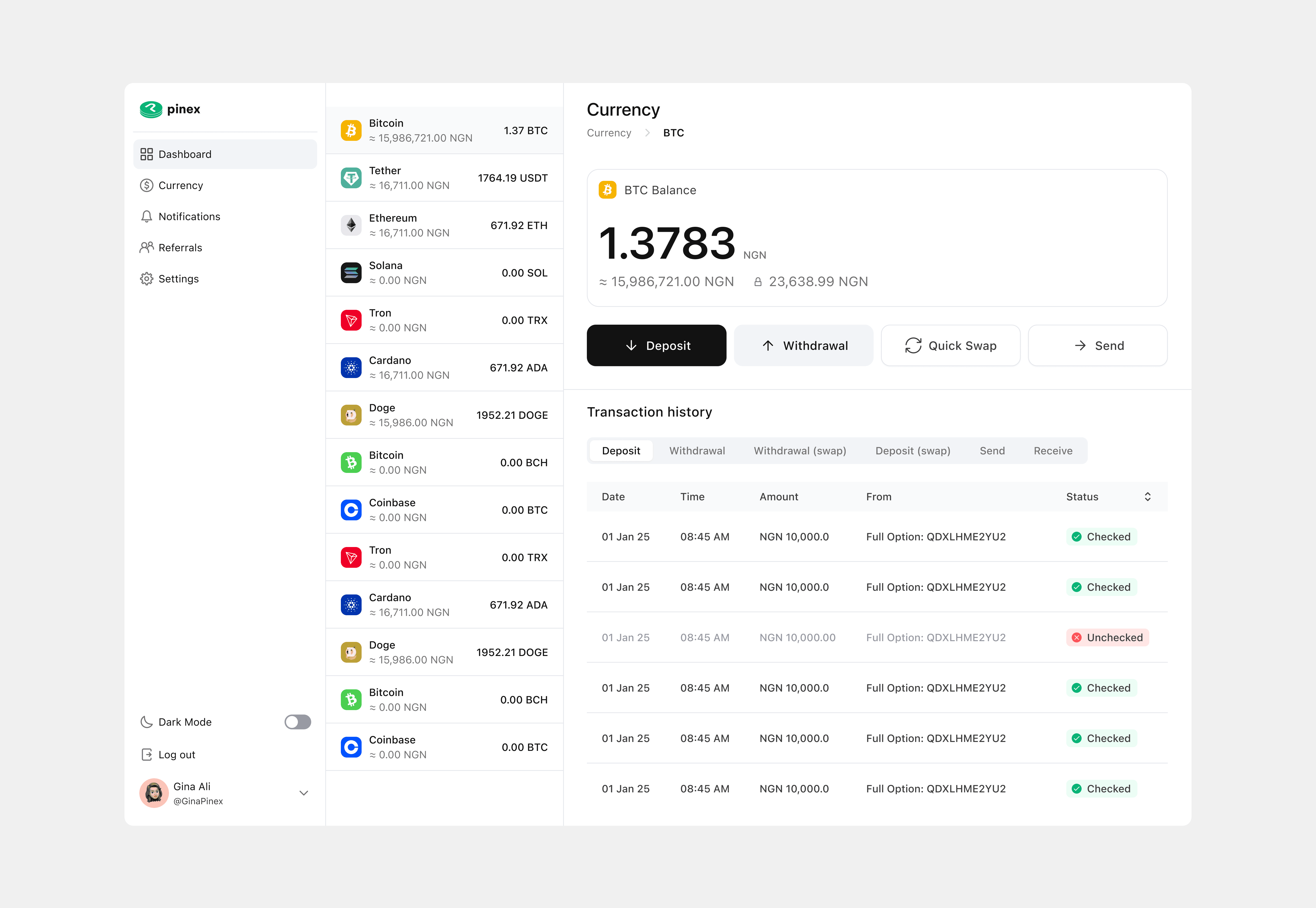
A Crypto Exchange That Almost Was: Lessons from Designing a Multi-Currency Crypto Exchange
Designed a market-fit crypto experience that simplified deposits, swaps, and withdrawals
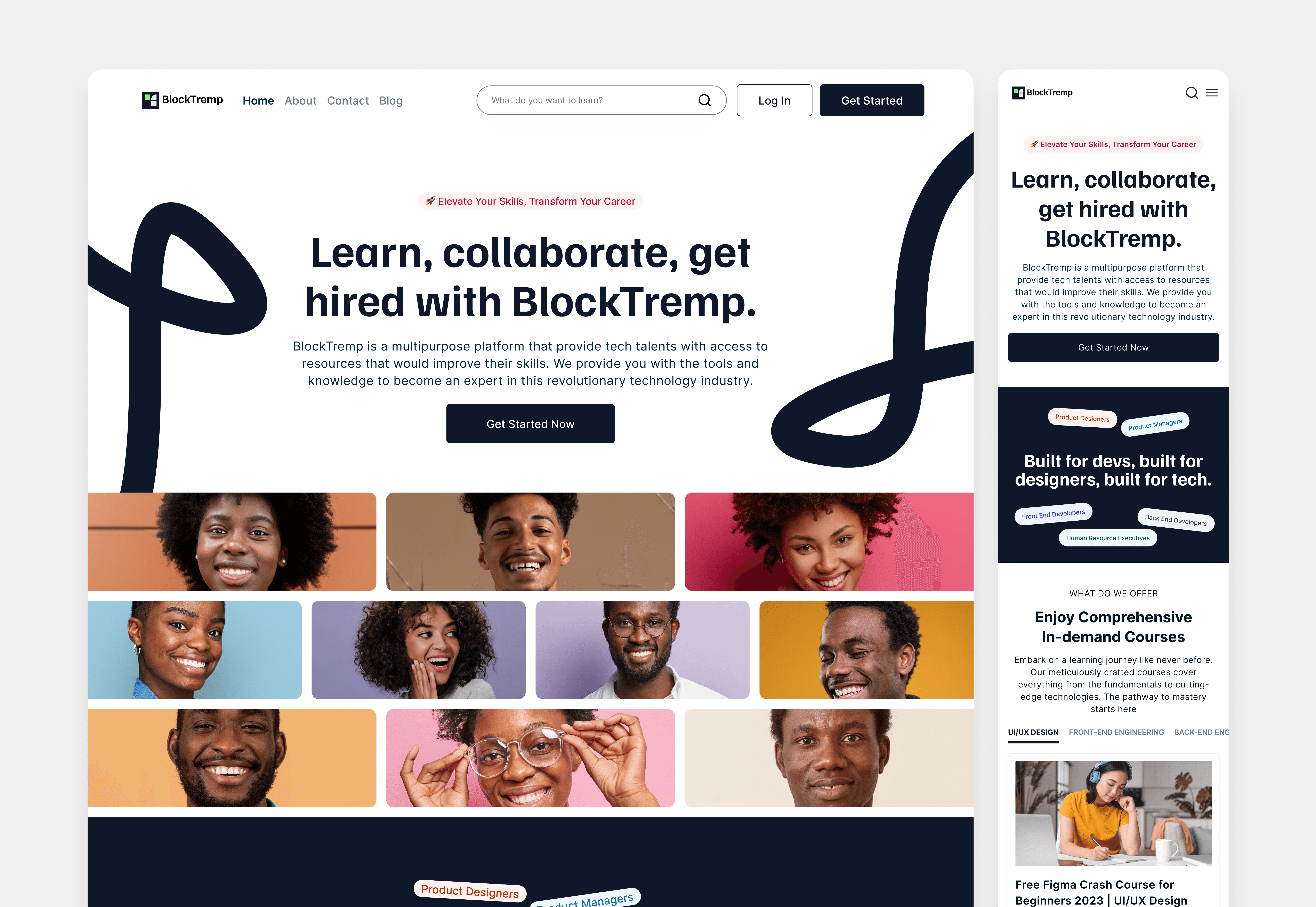
My 2+ Year Journey at BlockTremp, Designing Learning Experiences that Drove Real Results and Industry Recognition
Led Product, Marketing & Brand Design at Africa BlockChain Alliance on a project called BlockTremp; making tech education accessible to everyday users
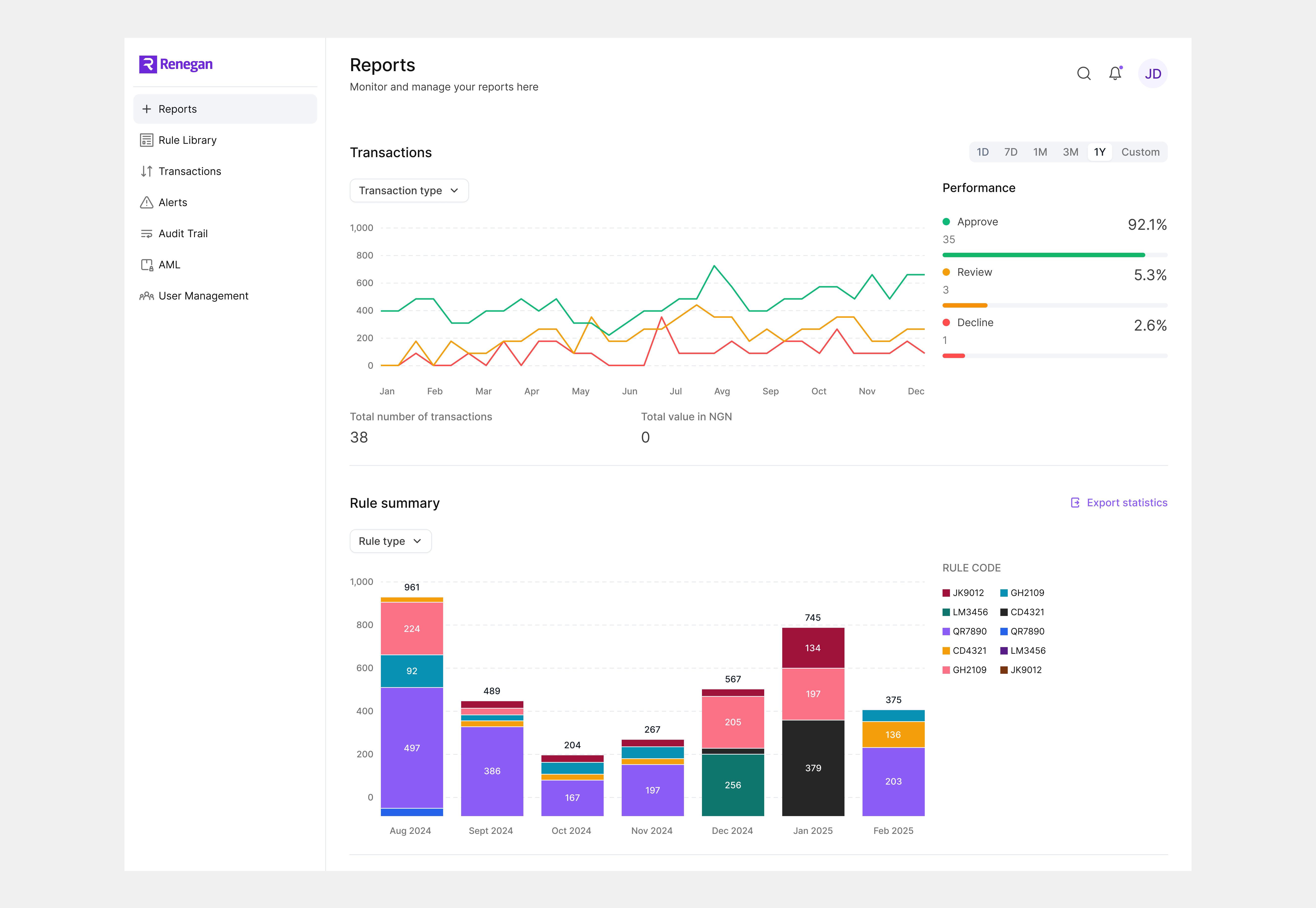
Renegan – Designing a Real-Time Fraud Detection Platform for Banks and Fintechs
Designed Renegan's end-to-end fraud monitoring platform from the ground up—dashboard, rule builder, alerts, AML screening, and onboarding—helping banks and fintechs detect fraud in real-time before launch.